Cleaner and Housekeeping Jobs in Greece for Foreign Workers (2026)
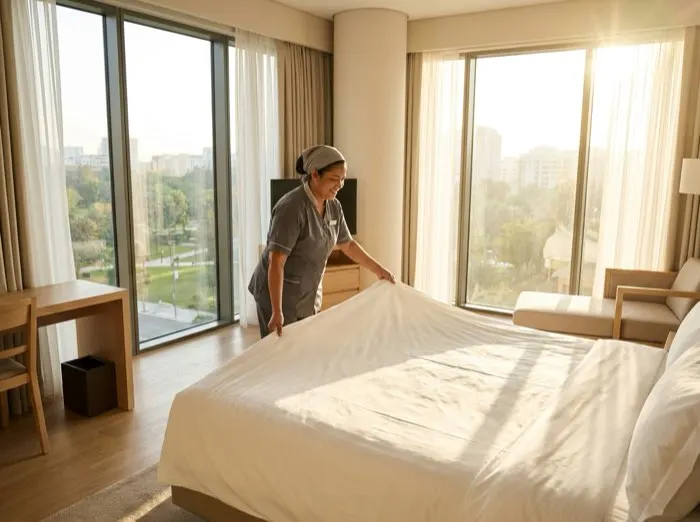
Greece relies heavily on international staff for housekeeping and cleaning, especially in its massive tourism sector. Every year, millions of visitors flood Greek islands and coastal towns. Hotels, resorts, rental villas, and commercial facilities require thousands of cleaners to operate smoothly. If you are coming from outside the European Union, such as South Asia, Africa, Latin America, Central Asia, or non-EU Balkan states, there are genuine work opportunities here, but you must understand how the local market works.
Housekeeping in Greece is divided into two distinct worlds: seasonal tourism cleaning and year-round urban cleaning. Seasonal work dominates the market. It runs mainly from April through October in tourist hotspots. Urban cleaning in major cities lasts all year, though visa sponsorship is far more common through large hotel chains and resort operators than small commercial cleaning agencies. If you want a non-EU work visa, seasonal hotel contracts under the Greek employer invitation system are your clearest path.
Where the jobs are: Key regions and hiring cycles
The demand for cleaning staff in Greece changes dramatically depending on location and time of year. Knowing where and when to look gives you a major advantage over other applicants.
- Crete and Rhodes: These large islands have long holiday seasons running from April to November. They host massive resort complexes that hire hundreds of housekeepers each season. Free shared accommodation is often provided for foreign staff.
- The Cyclades (Mykonos, Santorini, Paros): These famous islands have intense, shorter seasons running from May to October. The workload is heavy due to quick guest turnover in boutique hotels and luxury villas. Pay can be slightly higher here, but living quarters are often shared tightly.
- Halkidiki and the Ionian Islands (Corfu, Zakynthos): Popular with European family tourists, these areas hire large numbers of seasonal housekeeping staff for hotels and holiday apartments.
- Athens and Thessaloniki: Greece's two largest cities offer year-round cleaning work in hotels, private health centers, office buildings, and residential complexes. However, securing non-EU visa sponsorship for basic city commercial cleaning can be slower than seasonal resort hiring.
The recruitment cycle for seasonal resort work starts early. Greek employers begin looking for foreign staff between January and March. Visas and contracts are finalized by early spring so that workers arrive before hotels open in April or May. If you begin looking in June, most seasonal positions are already filled.
Pay, working hours, and local wage rules
In Greece, hotel and cleaning workers are covered by national minimum rules and sector agreements. The Panhellenic Federation of Tourism-Hotel Workers (POE-YTE) negotiates collective bargaining agreements that set base wages for hotel housekeepers.
- Monthly net pay for seasonal resort staff: Expect between €750 and €1,000 net per month after taxes and social security (EFKA) contributions. Many seasonal hotel packages include free shared housing and at least one meal per day, which significantly reduces your living costs.
- Monthly net pay for urban year-round cleaners: Expect between €670 and €850 net per month for a standard 40-hour work week. In urban settings, you usually have to pay for your own rent and food.
- Overtime and rest days: During the peak summer months of July and August, hours can be long. Greek labor law mandates rest days and extra pay for Sunday or holiday work, though seasonal hotel schedules can be intense.
- Tips: In luxury resorts and boutique villas on popular islands, housekeepers often receive cash tips from guests, which can add €50 to €200 per month to your take-home income.
Visas, permits, and official health requirements
To work legally in Greece as a non-EU citizen, you cannot simply arrive on a tourist visa and start working. You need a formal work authorization process handled through the Greek government.
- The Metaklisi system (seasonal recruitment): This is the official process where a Greek employer requests permission from the local Decentralized Administration (Apokentropomeni Dioikisi) to bring in workers from outside the EU. The employer must prove that the position could not be filled by local or EU candidates. Once approved, you take the official document to the Greek embassy or consulate in your home country to get your Type D visa.
- Health Certificate (Pistonpoiitiko Ygeias): Any worker involved in hotel housekeeping, cleaning, or food-adjacent roles in Greece must obtain an official medical certificate. This requires a chest X-ray for tuberculosis and basic laboratory tests administered by a Greek public hospital or health center after you arrive.
- EFET hygiene standards: If your cleaning duties include areas where food is prepared or served, such as hotel dining rooms or kitchen prep spaces, employers may require a basic hygiene certificate governed by the Hellenic Food Authority (EFET).
- Tax and Social Security Registration: Once in Greece, your employer must register you for an AFM (tax number) and an AMKA (social security number) so you can pay taxes and receive public healthcare coverage.
Reality check: Common mistakes non-EU workers make
Many international job seekers lose time or money because they misunderstand Greek labor regulations. Keep these facts in mind:
- Tourist visas cannot be converted into work permits: Arriving in Greece on a 90-day Schengen tourist visa hoping to find a job on the spot is illegal. You cannot convert a tourist visa to a work visa while staying inside Greece.
- Never pay an agent for a job offer: Workuro is free for workers, and under Greek law, employers pay recruitment fees. Paying a middleman for a fake job contract is a common scam.
- Free housing varies in quality: Seasonal resort work often includes accommodation, but it is usually shared staff housing with two to four people per room. Always ask your employer about living conditions before signing.
- Work permits are tied to specific employers: Under the seasonal Metaklisi scheme, your visa gives you permission to work for the employer named on your contract. You cannot freely swap jobs without legal authorization.
- Seasonal work is bound by dates: When hotels close in October or November, seasonal visas end, and foreign workers must return home unless they secure a legal extension or transition to another visa category.
Language requirements and daily work reality
You do not need to speak fluent Greek to land a housekeeping job in Greece, but language skills directly affect your day-to-day experience and safety.
- English proficiency: Basic to intermediate English is essential in tourist regions like Crete, Rhodes, and Mykonos. You need to understand instructions from supervisors, read safety labels on chemical cleaning products, and respond politely to hotel guests.
- Greek language: In year-round urban jobs in Athens or Thessaloniki, basic conversational Greek is much more important because team leaders and property managers may not speak English.
- Physical demands: Housekeeping in large hotels requires physical endurance. You will be bending, lifting heavy linen bags, pushing supply carts, and cleaning up to 12 to 18 rooms per shift during peak summer turnover days.
- Safety standards: European Union safety regulations apply to chemical usage. You will be trained on handling cleaning agents, using personal protective equipment, and adhering to hotel hygiene rules.
Build your Workuro profile to get found by Greek employers
Greek resort owners and hotel management companies begin searching for foreign staff months before the tourist season opens. When they search the Workuro registry, they look for specific details that show you are ready for the job.
To make your profile stand out to Greek employers, make sure to add these specific details:
- List your location preferences: Specify if you are looking for seasonal work in resort areas like Crete, Rhodes, the Cyclades, or Halkidiki, or year-round roles in Athens or Thessaloniki.
- Highlight relevant experience: Include details about past housekeeping, commercial cleaning, room attendant, or laundry experience in hotels, cruise ships, or private residences.
- Mention your language levels: Be honest about your English and Greek capabilities. Even basic English is a strong selling point for island resort jobs.
- Note ready documents: State if you already hold a valid passport, prior European work experience, or any health and hygiene certificates.
- Select your availability dates: Clearly state when you can start working, such as March or April for the upcoming tourist season.
Complete your Workuro profile today so verified employers in Greece can find your details, review your background, and contact you directly with legitimate job offers.
¿Listo para que te encuentren?
Crea tu perfil en 2 minutos. Gratis, sin tarjeta de crédito.
Sigue leyendo