Cleaner and Housekeeping Jobs in Iceland for Foreign Workers (2026)
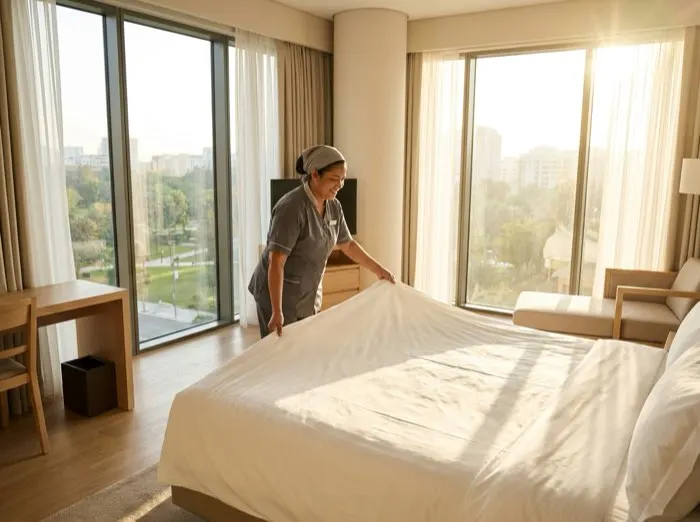
Housekeeping and Cleaning Jobs in Iceland: The Non-EU Reality
Iceland relies heavily on foreign labor to support its massive tourism industry and domestic services. With a local population of around 390,000 people, the country simply does not have enough local workers to clean its hotels, guesthouses, airport facilities, and commercial buildings. If you are applying from outside the European Union or European Economic Area (such as South Asia, Africa, Latin America, the Balkans, or Central Asia), there are genuine opportunities for cleaning and housekeeping work. However, you must understand the legal route before you start applying.
First, an honest assessment: securing a work permit in Iceland as a non-EU citizen for an entry-level housekeeping role is harder than it is for skilled technical trades. Icelandic law gives strict priority to Icelandic and EU/EEA citizens. For a non-EU applicant to receive a work permit, the Icelandic employer must prove that they advertised the position within the EEA first and could not find a candidate. Because of this rule, non-EU workers are most frequently hired during the peak tourism season or in rural areas where local staff accommodation is required and local labor is non-existent. If you want a quick, entry-level non-EU work permit without strong seasonal demand, places like Croatia or Malta often have lower administrative hurdles. But if you are patient and target the right regions in Iceland, the pay and working standards are among the highest in Europe.
Where the Jobs Are: Regions and Key Hotspots
Cleaning work in Iceland is concentrated in specific geographical zones. Knowing where employers are desperate for staff helps you target your applications effectively.
- Reykjavík Capital Region (Höfuðborgarsvæðið): The largest employer of cleaners in the country. This area includes Reykjavík, Kópavogur, and Hafnarfjörður. Demand comes from large hotel chains, office complexes, hospitals, and specialized commercial cleaning companies. Positions here are often year-round, but finding your own housing in the capital is extremely difficult and expensive.
- Suðurnes Region (Keflavík and Reykjanesbær): Located near Keflavík International Airport. This zone requires round-the-clock facility cleaning at the airport, car rental centers, and surrounding airport hotels. Employers in this region frequently recruit foreign workers due to high turnover and round-the-clock operations.
- South Coast (Vík í Mýrdal, Kirkjubæjarklaustur, and Höfn): This is the prime area for seasonal hotel and guesthouse housekeeping. Because these towns have tiny local populations, hotel owners depend entirely on foreign workers during the summer season (May to September) and the winter aurora season (October to March). Crucially, employers in these rural south-coast towns almost always provide dedicated staff housing.
- North Iceland (Akureyri and Lake Mývatn): Akureyri is Iceland's second-largest urban area. Combined with the tourist cluster around Lake Mývatn, this region hires housekeepers for regional boutique hotels, winter ski resorts, and summer tour lodges.
Work Permits, Unions, and Official Paperwork
You cannot move to Iceland on a tourist visa and start working. Working illegally leads to swift deportation, fines, and a re-entry ban across the Schengen Area. Every legal foreign worker follows a strict process managed by two main state bodies.
- Directorate of Labour (Vinnumálastofnun): This agency approves your work permit (atvinnulayfi). Your employer must apply directly to Vinnumálastofnun on your behalf before you travel to Iceland. They must submit your signed employment contract showing that your wages match local union standards.
- Directorate of Immigration (Útlendingastofnun): This agency handles your residence permit (atvinnu- og dvalarleyfi). Once Vinnumálastofnun approves the work permit, Útlendingastofnun processes your legal right to reside in the country.
- Icelandic Unions (Efling, SGS, VR): Almost all workers in Iceland belong to a labor union. For cleaners in the capital and south, Efling is the primary union. In regional areas outside the capital, unions under the umbrella of Starfsgreinasamband (SGS) represent hotel and cleaning workers. Union collective agreements (kjarasamningar) legally protect your wages, rest breaks, holiday pay, and overtime rates.
- National ID (Kennitala) and Tax Card (Skattskort): Once your permit is approved and you arrive in Iceland, you will receive a Kennitala. This ten-digit identification number is required for everything, including receiving your salary, opening a bank account, and accessing healthcare. You must also register for a tax card so your employer applies your personal tax allowance correctly.
Wages and Net Monthly Pay in Icelandic Króna
Pay in Iceland is governed strictly by union collective agreements. Employers cannot legally pay you less than the minimum union rate for your job category. Cleaning and housekeeping fall under Pay Pay Category 2 or 3 in standard agreements.
For full-time work (37.5 to 40 hours per week), standard gross monthly pay ranges from 435,000 ISK to 490,000 ISK (Icelandic Króna). This base pay increases if you work evening shifts, weekends, or statutory holidays, which carry mandatory wage supplements ranging from 33% to 45% above base pay.
Income tax in Iceland operates on a bracket system, but all legal residents receive a monthly personal tax credit (persónuafsláttur) that lowers their effective tax rate. After income tax, municipal tax, and standard union dues (usually around 1% of gross earnings) are deducted, typical net monthly take-home pay looks as follows:
- Base Net Monthly Income: Approximately 330,000 ISK to 380,000 ISK net per month for basic day shifts.
- Shift-Work Net Income: Approximately 370,000 ISK to 430,000 ISK net per month if you regularly work evening or weekend housekeeping shifts.
- Staff Accommodation Deductions: If you work in a rural area (such as Vík or Höfn) where the employer provides staff housing, the company will legally deduct rent from your paycheck. Accommodation costs generally range from 50,000 ISK to 90,000 ISK per month for a private or shared room, including utilities.
Language Requirements and Daily Work Environment
You do not need to speak Icelandic to work as a cleaner or room attendant in Iceland. English is the practical working language in almost all hotel housekeeping departments and industrial cleaning crews.
- English Level: You should have a functional level of spoken English (B1 level or basic conversational skill). You must be able to understand daily task lists, communicate with your supervisor, understand basic safety instructions, and read chemical safety labels (such as dilution instructions for cleaning agents).
- Physical Demands: Housekeeping in Icelandic hotels is fast-paced, especially during the peak tourist season when hotels run at maximum occupancy. You will be expected to clean a set number of rooms per shift to strict quality standards. Commercial cleaning (cleaning offices, schools, or airport terminals) often involves late evening or overnight shifts.
- Certificates: No formal academic cleaning degree is required. However, having certification in professional hygiene standards, chemical handling safety, or previous hotel room cleaning experience makes your application stand out significantly to employers who are filling out work permit paperwork.
Reality Check: What Workers Get Wrong About Iceland
- Misconception: You can come on a tourist visa and look for a job on the spot.
Reality: You cannot legally change status from a tourist to a worker while inside Iceland. You must have a signed contract and an approved permit before you begin working. - Misconception: Housekeeping jobs lead automatically to permanent residency.
Reality: Temporary seasonal work permits do not count toward permanent residency. General work permits granted for low-skilled positions can be renewed, but they are tied directly to your employer and specific labor market rules. - Misconception: High gross pay means you will save huge amounts of money easily.
Reality: Iceland is one of the most expensive countries in the world. Buying food, public transport, and personal items costs significantly more than in continental Europe. Workers who save the most money are usually those in rural hotel roles with employer-provided housing. - Misconception: You can survive without knowing any English.
Reality: Supervisors in Icelandic hotels and cleaning agencies are often foreign nationals themselves. English is the only common language used for team briefings and safety procedures.
Build Your Workuro Profile to Target Icelandic Employers
Icelandic employers and recruitment agencies turn to international registries when local labor shortages hit peak levels. To make your Workuro profile visible and attractive to managers hiring for Icelandic operations, make sure you register specific details rather than generic information.
- Specify Preferred Locations: List target Icelandic areas explicitly, such as Reykjavík, Suðurnes/Keflavík, or South Iceland (Vík/Höfn).
- Highlight English Skills: Clearly state your spoken English level, as this is the primary requirement for supervisors in Iceland.
- Detail Hotel and Hygiene Experience: List any past experience in hotel room turnover, industrial sanitation, or chemical safety training.
- Indicate Accommodation Preferences: State clearly if you are willing to relocate to rural regions and live in employer-provided staff housing.
Keep your contact details up to date on Workuro so interested employers in Europe can review your qualifications and contact you directly when seasonal and year-round vacancies open.
¿Listo para que te encuentren?
Crea tu perfil en 2 minutos. Gratis, sin tarjeta de crédito.
Sigue leyendo