Scaffolder Jobs in Italy for Foreign Workers (2026)
 Italy
ItalyScaffolder Demand in Italy for 2026: What to Expect
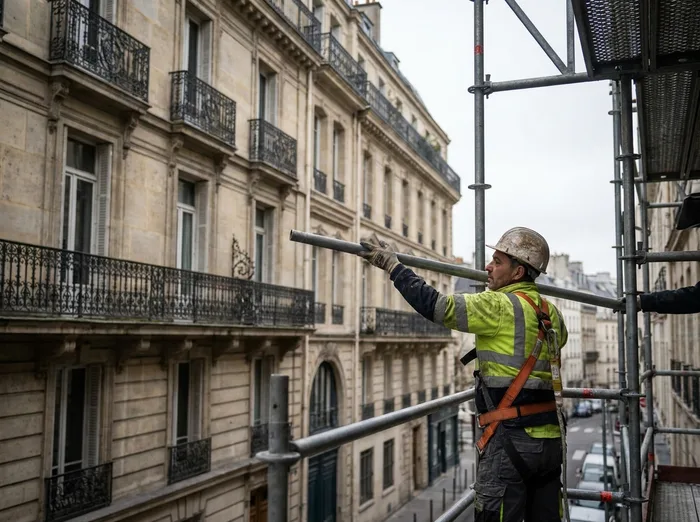
If you are looking for scaffolding work in Europe as a non-EU citizen, you need to know where Italy stands in 2026. Italy is not the largest scaffolding market in Western Europe. Countries like Germany, the Netherlands, and Belgium hire larger total volumes of scaffolders and often accept workers who speak only basic English. However, Italy has a steady and specialised demand for skilled scaffolders who are willing to learn conversational Italian and work within local safety regulations.
The massive surge in residential renovation driven by tax incentives like the Superbonus 110 percent has slowed down compared to previous years. In 2026, the demand for scaffolding in Italy comes from two main areas: large national infrastructure projects funded by the European recovery funds (PNRR) and industrial sectors like shipbuilding, oil refining, and restoration of historic architecture. If you want a quick job without learning any Italian, you should look at Germany or the Netherlands instead. But if you want a reliable job in Southern Europe, reasonable living costs, and a path to long-term work in Italy, this guide explains how the system works for foreign applicants.
Key Regions and Industrial Hubs Hiring Scaffolders
Scaffolding work in Italy is not spread evenly across the country. Most formal hiring for foreign workers happens in specific industrial areas, port cities, and economic centers in the northern and central regions.
- Lombardy (Milan, Brescia, Bergamo): This is Italy's construction center. Milan has constant commercial building projects, high-rise maintenance, and infrastructure upgrades. Companies here frequently need workers experienced in prefabricated frame scaffolding (*ponteggi a telai prefabbricati*).
- Liguria (Genoa, La Spezia): Home to major shipyards and industrial ports. Shipyard scaffolding (*ponteggi navali*) requires building complex structures inside docks and around ship hulls. This work relies heavily on tube and fitting systems (*ponteggi a tubi e giunti*).
- Friuli Venezia Giulia (Monfalcone, Trieste): Another major shipbuilding center. Large marine engineering contractors routinely hire foreign teams through subcontracts and direct work permits for shipyard maintenance.
- Veneto and Emilia-Romagna (Verona, Venice, Bologna, Ravenna): These regions combine industrial chemical plants, civil construction, and continuous restoration of historic brick and stone structures. Scaffolding on historic sites requires precision to avoid damaging ancient walls.
- Southern Italy and the Islands: Demand exists in cities like Naples or Taranto (industrial steel works), but formal visa sponsorship for non-EU workers is less common here compared to the north.
Certificates and Safety Training You Need in Italy
Italian construction sites are strictly regulated under health and safety law (Decree Law 81/08). You cannot step onto an Italian scaffold without formal training and safety certification. Employers must verify that you hold or can complete the required local qualifications before you start work.
- Ponteggi Certificate (Abilitazione Ponteggi): This is the official 28-hour course required for mounting, dismantling, and altering scaffolding (*montaggio, smontaggio e trasformazione di ponteggi*). It covers 14 hours of theoretical safety and 14 hours of practical assembly. The certificate is issued by accredited regional bodies or trade schools known as *Scuola Edile* (under the national organisation Formedil).
- Working at Heights Certificate (Lavoro in Quota): Training on using Personal Protective Equipment (PPE) against falls from height, specifically Category 3 PPE (*DPI di III Categoria*), including harnesses, lanyards, and fall arresters.
- Pi.M.U.S. Knowledge: Pi.M.U.S. stands for *Piano di Montaggio, Uso e Smontaggio*. It is the site-specific assembly and safety plan required by Italian law for every single scaffold. You do not get a personal license for Pi.M.U.S., but you must know how to read and follow this document on site.
- General Site Safety (Formazione Sicurezza Cantiere): A mandatory basic course (usually 16 hours) required for all construction workers entering an Italian job site for the first time.
If you earned scaffolding licenses in non-EU countries like India, the Philippines, Kenya, or Albania, Italian employers will respect your practical experience. However, foreign certificates do not automatically replace Italian legal requirements. In most cases, your Italian employer will book you into a quick conversion or official course at a local *Scuola Edile* as soon as you arrive in the country.
Language and Communication Requirements
Do not underestimate the importance of the Italian language. Unlike international tech jobs or Northern European shipyard work where English is common, Italian construction sites operate almost entirely in Italian. Site foremen (*capocantiere*), safety officers (*RSPP*), and colleagues will give orders and safety instructions in Italian.
You do not need perfect grammar, but you must reach an elementary conversational level (A2 level). You must understand basic direction words, tool names, emergency commands, and safety warnings. If a safety inspector visits a site and finds that a worker cannot understand basic instructions in Italian, the employer can face heavy fines. Demonstrating that you are already learning basic Italian makes your job application stand out immediately to employers.
Work Permits, Decreto Flussi, and Hiring Routes
To work legally in Italy as a non-EU citizen, you need a work permit (*Nulla Osta*) and a work visa (*Visto per lavoro subordinato*). The process involves clear legal steps that your employer must initiate from inside Italy.
- Decreto Flussi: This is the Italian government's annual quota system that sets how many non-EU workers can enter Italy for work. The government sets specific quotas for non-seasonal wage workers, with dedicated allocations for the construction sector (*edilizia*). Certain countries that have bilateral agreements with Italy (such as Albania, Tunisia, Morocco, Egypt, Bangladesh, India, and others) often receive dedicated quota allocations.
- Application Process: The Italian employer applies online during the official application period (often called *Click Day*). They submit a contract proposal showing that they will pay standard union wages and provide proper housing arrangements.
- Issuance of the Nulla Osta: The immigration office (*Sportello Unico per l'Immigrazione*) checks the application. If approved, they issue the authorization (*Nulla Osta*).
- Visa and Arrival: Once the *Nulla Osta* is ready, you submit your passport to the Italian embassy or visa center in your home country to receive your entry visa. After arriving in Italy, you sign the residence contract (*Contratto di Soggiorno*) and apply for your residence permit (*Permesso di Soggiorno*).
- Timeline: The entire process from employer application to your arrival in Italy usually takes between 3 and 8 months, depending on the speed of local government offices and embassy appointment slots.
Wages, Hours, and Working Conditions under CCNL
Pay rates in Italian construction are set by national collective bargaining agreements called *CCNL Edilizia* (National Collective Labor Agreement for Construction). This protects workers by establishing minimum wage standards across the country.
- Base Wages (Net Monthly): Most foreign scaffolders start at *Livello 1* (entry level) or *Livello 2* (qualified worker). For a full-time contract (40 hours per week), net monthly pay generally ranges between 1,400 EUR and 1,800 EUR. Experienced scaffolders who can lead a team or assemble complex tube and fitting systems (*Livello 3*) can earn between 1,800 EUR and 2,100 EUR net per month.
- Overtime and Allowances: Working on weekends or taking overtime (*straordinario*) increases your pay. Industrial or offshore/shipyard projects often pay extra hardship or travel allowances (*trasferta*).
- Benefits: Under the *CCNL Edilizia*, workers receive paid vacation, a 13th-month bonus payment (*tredicesima*), retirement contributions, and severance pay (*TFR - Trattamento di Fine Rapporto*). Construction workers are also registered with the *Cassa Edile*, a welfare fund that pays health allowances and seasonal bonuses.
- Seasonality: Outdoor civil scaffolding slows down slightly during severe winter weather in northern mountain areas, but industrial plant and shipyard scaffolding runs continuously throughout the year. Peak hiring happens in early spring.
Reality Check: Common Myths About Scaffolding in Italy
- Myth 1: You can enter on a tourist visa and start working legally. Truth: Working on a tourist visa is illegal in Italy. You must receive your *Nulla Osta* while outside the country and enter with a proper work visa. Working illegally leads to deportation and blacklisting.
- Myth 2: Speaking English is enough to get by on Italian job sites. Truth: Most small and medium Italian construction firms operate only in Italian. Basic Italian is a practical requirement for site safety and daily work.
- Myth 3: You have to pay an agency to get a job or visa. Truth: Italian law forbids charging job seekers placement fees. Legitimate employers cover the costs of legal filings and business fees inside Italy.
- Myth 4: Italian wages are the same as Northern European wages. Truth: Italian monthly net pay is lower than in Switzerland, Germany, or Scandinavia. However, rent and cost of living in many Italian regions are also significantly lower, and the work agreement offers strong social protection.
Put Your Specific Details into Your Workuro Profile
When employers search for qualified scaffolders on Workuro, they look for specific trade details, not vague descriptions. You do not need to wait for a job posting to be seen; complete profiles allow employers to find you directly.
Make sure your Workuro profile includes the exact terms used in the Italian industry:
- Select your preferred working locations, mentioning target regions like Lombardy, Liguria, Friuli Venezia Giulia, or Veneto.
- List your experience with specific scaffolding systems: frame scaffolding (*telai prefabbricati*), ringlock/modular systems (*multidirezionale*), or tube and fitting (*tubi e giunti*).
- State your current status for required safety credentials, such as experience working at heights or completing safety courses.
- Include your current level of Italian language ability, even if you are currently taking basic beginner lessons (A1 or A2).
- Specify your home nationality and current legal status so employers can calculate the exact visa route under the *Decreto Flussi* quotas.
A clear profile with exact details helps Italian construction companies find you when they prepare their visa quota applications for 2026.
Ești gata să fii găsit?
Creează-ți profilul în 2 minute. Gratuit, fără card bancar.
Continuă lectura