Cleaner & Housekeeping Jobs in Spain for Foreign Workers (2026)
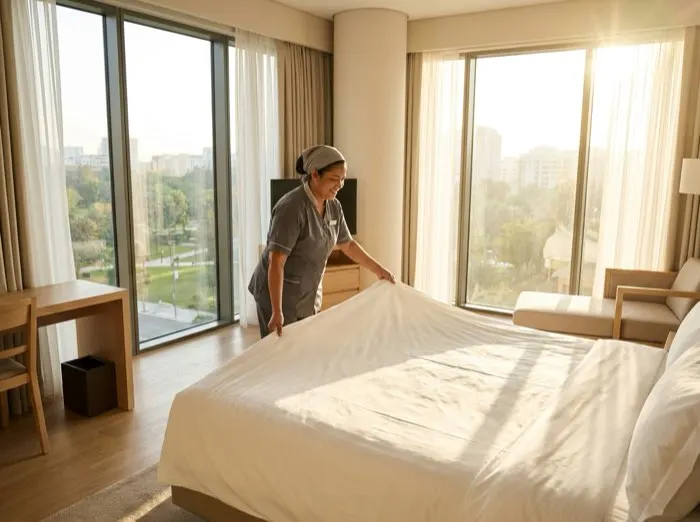
Housekeeping and Cleaning Jobs in Spain: The 2026 Landscape
Cleaners and housekeepers - known in Spain as personal de limpieza for general cleaning or camareras de pisos for hotel room attendants - form the backbone of the country's massive tourism, commercial, and domestic sectors. If you are a jobseeker from outside the European Union, including countries in South Asia, North or Sub-Saharan Africa, Latin America, Central Asia, or the Balkans, Spain offers thousands of active opportunities every year. However, securing a job requires navigating formal work permits, regional hiring patterns, official pay scales, and mandatory safety certifications.
Unlike some Northern European countries where conversational English might suffice on a night shift, Spanish employers almost universally require functional Spanish language skills. Furthermore, Spain's labor market operates under strict provincial sector agreements that dictate your minimum pay, working hours, and extra annual payments. Understanding how these rules work in practice is the first step toward securing legal employment in Spain.
Top Regions and Hiring Cycles for Cleaners in Spain
Demand for cleaning workers is spread across the country, but the hiring cycles and types of work vary significantly depending on the Autonomous Community and province.
- Balearic Islands (Mallorca, Ibiza, Menorca): This is one of the highest-demand areas for hotel housekeepers (camareras de pisos). The hiring season runs from March or April through October. Pay is among the highest in Spain due to strong local hotel union agreements, but seasonal housing is extremely scarce and expensive. Some resort employers provide staff accommodation, which must be clarified before accepting a contract.
- Canary Islands (Tenerife, Gran Canaria, Lanzarote): Unlike mainland Spain, the Canary Islands have a year-round tourist season, with peak demand occurring from November to April during the European winter, followed by a secondary summer peak. Hotel and vacation-rental housekeepers are in continuous demand here.
- Community of Madrid and Catalonia (Barcelona): These major urban centers offer year-round employment in office buildings, public transport networks, hospitals, schools, and urban boutique hotels. Recruitment is steady throughout the year, though seasonal dips occur in August when many businesses close for summer holidays.
- Andalusia (Costa del Sol - Málaga, Marbella, Estepona): The southern coastal strip focuses heavily on luxury hotels, golf resorts, and private villa maintenance. The peak hiring cycle starts in April and extends into late October.
Pay Rates and Union Agreements (Convenios Colectivos)
Pay in Spain is strictly regulated by sector-specific collective bargaining agreements known as convenios colectivos. These agreements are negotiated at the provincial level, meaning a cleaner in Palma de Mallorca may have a different base pay scale than a cleaner in Seville.
In general, cleaning staff fall under two main union agreements: the Convenio Colectivo de Hostelería (for hotel housekeepers and resort cleaners) or the Convenio Colectivo de Limpieza de Edificios y Locales (for office, commercial, and residential cleaners). Under these agreements, full-time workers (40 hours per week) can expect the following net monthly wages in 2026:
- Hotel Housekeepers (Camareras/os de pisos): €1,150 to €1,450 net per month, depending on the hotel category and region. Higher-tier luxury resorts in the Balearics or Marbella pay toward the upper end of this scale.
- Commercial and Building Cleaners: €1,050 to €1,250 net per month for standard day or night shifts. Night shifts (plus de nocturnidad) often attract a 15% to 25% pay bonus on top of the base rate.
- Domestic Cleaners (Empleadas de hogar): Regulated under the statutory national minimum wage (Salario Mínimo Interprofesional or SMI), full-time domestic workers earn a minimum guaranteed net income of approximately €1,134 per month when paid across 14 installments, or roughly €1,323 per month if extra payments are pro-rated across 12 months.
It is important to understand the 14-payment system (14 pagas) standard in Spain. Employers often pay 12 monthly salaries plus two extra bonuses (pagas extraordinarias) in July and December. If your contract specifies 12 payments instead, your monthly net pay will look slightly higher because the extra payments are distributed evenly across the year.
Work Permits, Visas, and Legal Routes to Spain
To work legally in Spain as a non-EU citizen, you must have a valid work permit. Spanish immigration law provides specific pathways, though each requires strict administrative compliance.
- General Work Visa (Visado de Trabajo por Cuenta Ajena): To hire directly from outside the EU, an employer must first show that the job opening could not be filled by a local worker. This is verified using the national shortage list, known as the Catálogo de Ocupaciones de Difícil Cobertura, published quarterly by the state employment service SEPE (Servicio Público de Empleo Estatal). While standard cleaning roles are rarely listed on this nationwide shortage list, employers can obtain an individual certificate of non-availability (certificado de insuficiencia de demandantes) if local recruitment efforts fail over a 15-day posting window.
- Seasonal Work Visas (Visado de Trabajo de Temporada): Used extensively in resort areas like the Balearics and Costa del Sol. Employers apply for group authorizations to bring foreign workers for up to 9 months per year. Workers must agree to return to their home country at the end of the contract, which builds a clean immigration history for future multi-year seasonal permits.
- Arraigo Routes (For Workers Already in Spain): Non-EU nationals who have resided in Spain for a specific continuous period may qualify for legal residency through social integration pathways. Under Arraigo para la Formación, workers undertake official vocational training in cleaning or hospitality to receive a temporary residence permit. Under Arraigo Social or Arraigo Laboral, a formal job offer from a registered employer allows workers to regularize their status.
Certificates, Qualifications, and Language Requirements
While formal academic degrees are not required for cleaning jobs, having official Spanish vocational qualifications significantly improves your chances of being hired and sponsored by an employer.
- Certificados de Profesionalidad: Issued by SEPE and regional employment offices (such as SOC in Catalonia or SAE in Andalusia), these standard certificates prove your technical skill. The most relevant certifications are SSCM0108: Limpieza de superficies y mobiliario en edificios y locales (Surface and Furniture Cleaning in Buildings) and SSCD0109: Prestación de servicios domésticos (Domestic Service Provision).
- Food Handler Card (Carnet de Manipulador de Alimentos): Required for housekeeping staff in hotels, guesthouses, or care facilities where cleaning duties overlap with kitchen spaces or breakfast service rooms. This certificate can be obtained through short, accredited online courses in Spain.
- Spanish Language Proficiency: You do not need formal university diplomas in Spanish, but employers expect you to understand spoken instructions, read chemical safety labels (prevención de riesgos laborales), and communicate basic updates. Aim for a practical A2 to B1 level in conversational Spanish.
Reality Check: What People Get Wrong About Housekeeping in Spain
- Getting hired without Spanish: Many applicants assume English is enough for hotel jobs. While English is useful in tourist areas, your direct supervisors, floor managers, and team members will speak Spanish. Basic Spanish is mandatory for daily work.
- Ignoring housing costs: High-wage seasonal regions like Ibiza or Mallorca have severe housing shortages. Accepting a €1,300 monthly job is not viable if rent for a shared room costs €800. Always confirm accommodation arrangements before agreeing to travel.
- Confusing gross pay with net pay: Contract figures in Spain are stated gross (bruto). Social Security contributions (roughly 6.35% for employees) and personal income tax (IRPF) will be deducted directly from your monthly paycheck.
- Working without formal contracts: Working unregistered (en negro) leaves you without health coverage, legal protections, or credit toward legal residence permits. Reputable employers will always register you with the Tesorería General de la Seguridad Social before your first day on the job.
Build Your Workuro Profile to Target Spanish Employers
Spanish employers and recruitment agencies search Workuro to find reliable foreign candidates ready to fill vacancies in hospitality, commercial facilities, and residential services. To make sure your profile appears in their search results, you must include specific, actionable details rather than general summaries.
When creating your Workuro profile, ensure you clearly state:
- Specific Job Titles: Use exact terms like Camarera de pisos, Personal de limpieza, or Limpiador/a industrial.
- Language Skills: Highlight your current Spanish level (e.g., A2, B1) along with any other languages you speak.
- Certifications: Mention official qualifications such as the SEPE SSCM0108 certificate, the Carnet de Manipulador de Alimentos, or health and safety training cards.
- Target Regions: Specify the exact Autonomous Communities or provinces where you are available to work, such as the Balearic Islands, Canary Islands, Madrid, Barcelona, or Málaga.
- Work History: Detail your practical experience handling cleaning machinery (e.g., industrial floor scrubbers, steam cleaners), handling chemical products safely, or managing hotel room turnarounds under strict time limits.
Completing these fields ensures your profile stands out to Spanish business owners and HR teams looking for qualified foreign workers to join their teams legally.
Handa ka na bang mahanap?
Gawin ang profile mo sa loob ng 2 minuto. Libre, walang credit card.
Magbasa pa