Tiler and Floor Layer Jobs in Germany for Foreign Workers (2026)
 Germany
If you are a skilled tiler or floor layer from outside the European Union, Germany is one of the most active markets for your trade in 2026. German construction companies, renovation firms, and interior fitting businesses face a deep shortage of qualified craftworkers. Older domestic workers are retiring, and fewer young local residents are entering the trades. This creates direct opportunities for experienced workers from South Asia, Africa, Latin America, Central Asia, and the Western Balkans.
However, working in Germany requires navigating specific rules. Germany relies on standard vocational credentials, clear legal visa channels, and strict job site standards. This guide breaks down how the German market works for tilers and floor layers in 2026, what you will earn, how to handle qualification recognition, and where the highest demand sits.
1. Tiling and Floor Laying Demand in Germany for 2026
Demand for finishing trades across Germany remains strong. While massive new residential high-rise projects have slowed due to material costs, interior renovation work is booming. The German government enforces strict energy-efficiency mandates for older residential and commercial buildings. Every major building upgrade requires new floor insulation, updated bathroom tiling, and modernized floor coverings.
In Germany, the trade is divided into clear specializations:
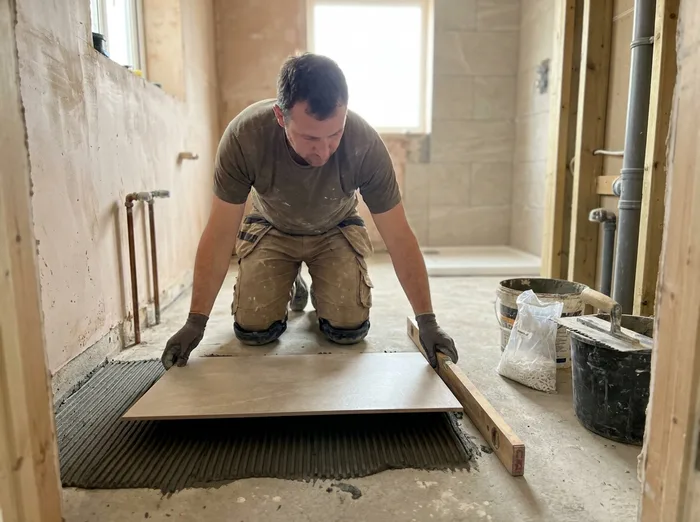
- Tilers (Fliesen-, Platten- und Mosaikleger): Workers who install ceramic tiles, natural stone, mosaic designs, and waterproof membrane systems in bathrooms, kitchens, swimming pools, and industrial sites.
- Floor layers (Bodenleger): Specialists who handle vinyl, carpet, laminate, linoleum, and synthetic flooring systems across commercial offices, hospitals, and residential spaces.
- Parquet layers (Parkettleger): Tradespeople focused on hardwood flooring installation, sanding, sealing, and historical restoration.
If you have solid experience in any of these areas, German employers want your skills. You do not need to worry about job availability. The primary challenge is completing the paperwork and matching your experience to German standard requirements.
2. Visas and Credential Recognition (Handwerkskammer)
To work legally in Germany as a non-EU citizen, you need a work visa based on the Skilled Immigration Act (Fachkräfteeinwanderungsgesetz). The core requirement for a skilled worker visa is proving that your foreign vocational training is equivalent to a German trade certificate (Gesellenbrief).
Here is how the recognition process works for finishing trades:
- The Responsible Authority: Craft trades in Germany are managed by the local Chamber of Crafts (Handwerkskammer or HWK). Your application goes through the HWK located in the region where your prospective employer operates.
- Equivalence Assessment (Gleichwertigkeitsprüfung): The HWK reviews your formal certificates, school transcripts, and documented work history to check if your training matches a German two-year or three-year apprenticeship program.
- Recognition Partnership (Anerkennungspartnerschaft): If your foreign qualification is not fully recognized right away, this visa path allows you to enter Germany and start working for your employer immediately, while completing additional practical training or taking a trade exam within 24 months.
- Language Requirements: For a standard skilled worker visa, you generally need basic to intermediate German language skills (A2 or B1 level). Even when an employer offers an initial job without strict language tests, site supervisors and safety inspectors communicate in German. Investing time in basic German language study before arriving gives you a massive advantage.
3. Pay Rates and What You Take Home Every Month
Pay rates in the German construction sector are structured by collective bargaining agreements (Tarifverträge) negotiated by trade unions and employers. This protects foreign workers by ensuring equal pay for equal work.
Here is what you can realistically expect to earn in 2026 as a tiler or floor layer:
- Gross Hourly Rate: Starting rates for qualified floor layers and tilers typically range between 16.50 Euros and 23.00 Euros per hour gross. Highly experienced tilers doing complex stone work or waterproofing can earn up to 26.00 Euros per hour gross.
- Gross Monthly Income: Based on a standard 40-hour work week (173 hours per month), your gross monthly salary will usually sit between 2,850 Euros and 4,000 Euros.
- Net Monthly Income (After Tax): Germany deducts income tax, health insurance, pension contributions, and unemployment insurance directly from your pay. For a single worker with no children (Tax Class 1), a gross salary of 3,200 Euros yields a net take-home pay of approximately 2,050 Euros to 2,200 Euros per month. Married workers whose spouses do not work (Tax Class 3) will take home higher net pay.
- Overtime and Allowances: Working outside your local area often comes with tax-free daily allowances (Auslöse) for meal costs and paid accommodation provided by the employer.
4. Where the Jobs Are: Key German Regions
While construction activity exists everywhere in Germany, hiring demand for tilers and floor layers is concentrated heavily in four main economic areas:
- North Rhine-Westphalia (NRW): Germany's most populous state, including cities like Cologne, Düsseldorf, Essen, and Dortmund. NRW has an enormous volume of housing modernizations and commercial renovation projects. Employers here are accustomed to hiring foreign workers.
- Bavaria (Bayern): Centered around Munich, Nuremberg, and Augsburg. Wages here are among the highest in Germany, driven by luxury residential developments and high-end commercial spaces. However, rental accommodation costs in Munich and surrounding areas are also high.
- Baden-Württemberg: Cities like Stuttgart, Karlsruhe, and Mannheim have thriving industrial economies. There is high demand for floor layers skilled in heavy-duty commercial flooring for automotive and engineering facilities.
- Berlin and Brandenburg: The capital region continues to grow fast, with widespread residential building projects and commercial conversions. Many foreign trade workers start their German career in this region.
5. Hiring Seasons and Work Site Standards
Tiling and indoor floor laying are less seasonal than outdoor civil engineering or bricklaying. However, weather patterns still influence the hiring cycle:
- Spring to Autumn (March to November): Peak hiring season. Main building structures are sealed, allowing interior finishing teams to work at full capacity across multiple sites.
- Winter (December to February): Hiring slows down slightly, but indoor tiling, bathroom refurbishment, and floor laying continue uninterrupted on heated jobsites. Some companies use short-time work allowances (Kurzarbeit) during extreme cold snaps, which guarantees a large portion of your wages.
- German Quality Standards (DIN Normen): German construction relies strictly on technical standards (DIN norms). Tilers must be familiar with proper surface preparation (Untergrundvorbereitung), self-leveling compounds (Spachtelmasse), and certified waterproofing systems (Verbundabdichtung). Employers respect speed, but they prioritize precision, clean corner joints, and adherence to safety protocols.
6. Reality Check: Misconceptions About Working in Germany
To build a successful career in Germany, you need accurate expectations. Here are five things workers often get wrong:
- Misconception: English is enough on job sites.
Reality: While large international sites use English, local supervisors, handovers, and technical safety signs are in German. Basic trade German is essential for safety and job progress. - Misconception: Years of experience replace all paperwork.
Reality: Experience is critical, but German immigration officials require verifiable paperwork, such as reference letters, official employment books, or trade diplomas. - Misconception: High gross pay means immediate personal wealth.
Reality: Deductions for health insurance, pension funds, and income tax reduce gross wages significantly. However, these deductions grant you high-quality healthcare and social protection. - Misconception: Foreign workers pay hiring agency fees.
Reality: Under German law, reputable employers cover recruitment expenses. You should never pay an agency or employer for a job offer or a contract. - Misconception: You can switch trades freely once in Germany.
Reality: Your initial work visa is tied to your specific trade qualification and contract. Changing from floor laying to general driving requires an updated authorization.
7. Build Your Workuro Profile to Get Found by German Employers
German employers search Workuro directly to find available tradespeople without paying high local recruitment agency commissions. To stand out to German companies searching for tilers and floor layers, make sure your Workuro profile includes exact details about your skills and goals.
When updating your profile, include the following specific items:
- Your Trade Details: State clearly whether you specialize in ceramic tiles, natural stone, parquet flooring, vinyl/LVT, or industrial floor coatings.
- Technical Experience: List specific equipment you operate, such as laser levels, wet saws, floor grinding machines, or subfloor moisture meters. Mention if you know how to install floor heating systems or apply liquid waterproofing membranes.
- Certificates and Documents: List any vocational diplomas, apprenticeship certificates, or employer reference letters you hold. If you have started the Handwerkskammer (HWK) recognition process, note your current status.
- Language Abilities: State your actual German level honestly (e.g., A1 beginner, A2 practical, B1 conversational), as well as any English or regional languages you speak.
- Target Regions: Mention specific states where you prefer to work, such as North Rhine-Westphalia, Bavaria, or Baden-Württemberg, or indicate if you are open to any location in Germany.
A complete profile with clear trade specifics helps German employers identify you immediately, match your qualifications with local visa pathways, and reach out directly with job opportunities.
Handa ka na bang mahanap?
Gawin ang profile mo sa loob ng 2 minuto. Libre, walang credit card.
Magbasa pa