Tiler and Floor Layer Jobs in Bulgaria for Foreign Workers (2026)
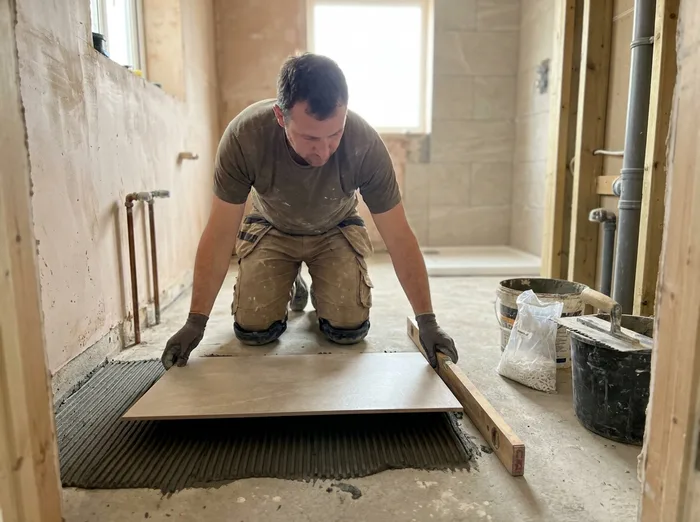
 Bulgaria
Tile and floor laying in Bulgaria: The market reality
If you are a skilled tiler or floor layer from outside the European Union, Bulgaria offers real work opportunities, but you must understand how the market operates. Bulgaria is experiencing a steady building boom, particularly in commercial centers and residential complexes. However, direct foreign recruitment for specialized finishings like tiling is smaller than the demand for general concrete or masonry workers. If your primary goal is the highest possible wage in Europe, markets like Germany or the Netherlands pay significantly more. But if you want a reliable entry point into the EU with lower living costs, a standard path to legal residence, and steady year-round work, Bulgaria is a solid choice.
Most tiling work for foreign workers is concentrated in major urban centers and resort development zones. The largest hiring hub is the capital city, Sofia, especially in rapidly expanding southern districts like Manastirski Livadi, Krastova Vada, and Malinova Dolina. The second major hub is Plovdiv, where residential growth follows the expansion of the Trakia Economic Zone. You will also find seasonal and year-round finishing jobs along the Black Sea coast in Varna and Burgas, as well as ski resort infrastructure updates in Bansko and Pamporovo.
Salaries, tax rates, and seasonal hiring cycles
Pay for tilers and floor layers in Bulgaria is calculated either as a fixed monthly salary or on a piece-work rate based on completed square meters. For standard employed foreign workers entering on a company contract, pay is usually paid monthly in Bulgarian Lev (BGN).
- Net monthly salary: A qualified foreign tiler usually earns between 1,500 BGN and 2,500 BGN net per month. High-skilled specialists working on complex stone or large-format tiles can earn up to 3,000 BGN net per month.
- Piece-work rates: When paid per square meter (known locally as na kvadrat), basic floor tiling pays between 20 BGN and 40 BGN per square meter depending on tile size, preparation work, and geographic location.
- Taxation: Bulgaria operates a simple 10 percent flat rate for personal income tax. Social security contributions are deducted automatically by your employer before you receive your net wage.
- Work hours: A standard working week is 40 hours over 5 days. Overtime on commercial sites is common during late summer and autumn finishing phases and is paid extra.
The hiring season follows a clear calendar. Outdoor terrace tiling, facade cladding, and public walkway paving run heavily from late March through November. Interior floor laying, bathroom tiling, and indoor floor levelling continue throughout the winter, but companies do most of their foreign hiring between January and April so workers arrive in time for the busy spring season.
Work permits and official immigration steps
As a worker from outside the EU, you cannot simply travel to Bulgaria and start working on a tourist visa. You must have a formal job offer from a Bulgarian company registered with the Bulgarian Employment Agency (Azentsiya po Zanyatostta).
The standard process uses the Single Residence and Work Permit (Edinstveno razreshitelno za prebivavane i rabota). Here is how the legal steps work:
- Employer application: Your employer submits your trade documents, passport copy, and employment contract to the Employment Agency in Bulgaria. They must prove that the wage meets legal standards.
- Agency approval: The Employment Agency reviews the application and checks local labor market conditions. Approval usually takes 4 to 8 weeks.
- Visa D application: Once approved, you apply for a long-term Type D Visa at the Bulgarian embassy or consulate in your home country. This step takes about 3 to 4 weeks.
- Arrival and residence card: After arriving in Bulgaria, you visit the local Migration Directorate (Direktsiya Migratsiya) under the Ministry of Interior to take your fingerprints and receive your physical plastic residence card.
Your work permit is tied directly to the employer who sponsored you. If you leave that employer, your work permit becomes invalid, and you must find a new sponsor who will re-apply for your permit.
Trade certifications, skills, and language requirements
In Bulgaria, vocational trade qualifications are overseen by the National Agency for Vocational Education and Training (NAPOO). However, as a foreign worker, you do not need to go through a complex formal recognition process for standard tile laying unless you are working on government heritage projects.
Employers care most about proven physical skills. You will often be asked to complete a practical test on site during your first week. You should be fully capable of handling:
- Surface preparation: Applying self-levelling screed, moisture barriers, and liquid waterproofing membranes in wet rooms.
- Tile cutting and fitting: Working with porcelain, ceramic, granite, and marble using wet saws, manual cutters, and angle grinders.
- Modern materials: Installing large-format tiles (60x120 cm or larger), which requires double-gluing methods and mechanical tile levelling systems (clips and wedges).
- Grouting: Applying cementitious grout and two-component epoxy grout neatly.
Regarding language, you do not need fluent Bulgarian to get hired, but site foremen rarely speak fluent English. Learning basic Bulgarian construction terms makes your work much safer and easier. Key words include plochki (tiles), lepilo (adhesive), fuka (grout), styazhka (screed), and nivelir (spirit level). Russian is also widely understood by older site supervisors, while English is used mainly in large international management firms in Sofia.
Reality check: Common mistakes foreign workers make
Avoid these common misunderstandings before accepting a contract in Bulgaria:
- Expecting Western European wages: Pay in Bulgaria is fair for the local cost of living, but it is lower than in Germany, Austria, or Scandinavia.
- Assuming piece-work rates include tools: If a job pays per square meter, clarify whether the contractor provides the tile cutter, laser level, and consumables, or if you must bring your own.
- Ignoring winter outdoor conditions: External tiling stops entirely when temperatures drop below freezing. Make sure your contract guarantees indoor work or a fixed base salary during winter months.
- Confusing gross and net figures: Always ask your employer for the net salary figure in Bulgarian Lev so you know exactly how much cash enters your bank account after taxes.
- Working without a valid residence card: Working on a short-term C visa or without completing the Migration Directorate registration is illegal and leads to immediate deportation and a Schengen entry ban.
Working conditions and daily life on site
Bulgarian construction sites follow European safety standards, but enforcement varies by employer. On large modern sites in Sofia and Plovdiv, you will be provided with standard safety gear, including steel-toe boots, hard hats, and knee pads. On smaller residential sites, you may be expected to provide your own work trousers and personal safety equipment.
Many Bulgarian construction firms hiring from abroad provide shared accommodation for foreign workers, usually in apartments or staff hostels close to the site or transit lines. Always confirm before signing whether housing expenses are deducted from your monthly salary or provided free of charge as part of your package.
Living costs in Bulgaria remain moderate compared to the rest of the EU. Groceries, public transport, and basic utilities are affordable, allowing foreign workers on standard net salaries to save money and send remittances home regularly.
Build your Workuro profile to reach Bulgarian employers
Bulgarian construction companies actively look for reliable, skilled workers who are ready to complete the legal visa process. To make sure employers can find you, your Workuro profile needs specific, accurate details about your trade experience.
Make sure you include the following information in your profile:
- Exact trade focus: Specify whether you specialize in ceramic tiles, large-format porcelain, natural stone, or vinyl and epoxy floor coverings.
- Practical skills: List your experience with surface prep, waterproofing membranes, self-levelling compounds, and epoxy grouting.
- Target regions: Mention if you are open to working in Sofia, Plovdiv, coastal cities like Varna, or regional areas.
- Language skills: State your exact level in English, Bulgarian, Russian, or other languages.
- Certificates and portfolio: Add details of any vocational diplomas or certificates issued in your home country, and upload clear photos showing your completed tiling work, straight layout lines, and finished joints.
A complete profile with clear details helps employers in Bulgaria evaluate your experience quickly and initiate your work permit application without delay.
Handa ka na bang mahanap?
Gawin ang profile mo sa loob ng 2 minuto. Libre, walang credit card.
Magbasa pa