Welder Jobs in Croatia for Foreign Workers (2026)
 Croatia
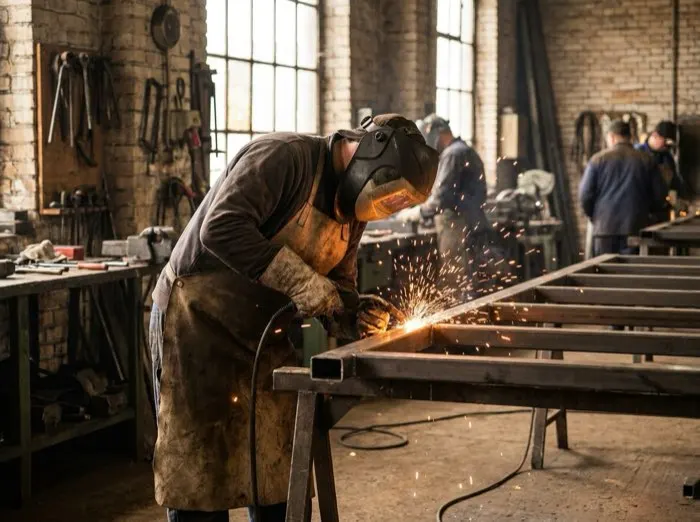
Croatia is facing an unprecedented shortage of skilled metalworkers. If you are a professional welder from South Asia, Africa, Latin America, the Western Balkans, or Central Asia, Croatia is one of the most accessible entry points into the European job market right now. Unlike some Western European countries where the demand for industrial welders has slowed down, Croatian shipyards, construction companies, and metal fabrication shops are actively searching for international talent to keep their projects running.
Because welding is officially classified as a shortage occupation by the Croatian government, the hiring process for foreign workers is faster and more straightforward than for many other trades. In this guide, we will break down exactly where the jobs are, what certificates you need, how much you can expect to earn, and how to successfully navigate the work permit process in 2026.
Where the Welder Jobs Are in Croatia
Welding jobs in Croatia are concentrated in specific industrial hubs and coastal regions. Knowing where these hubs are will help you target your job search and understand where you might be living.
- The Northern Coast (Istria and Kvarner): This region is the historic heart of Croatian shipbuilding. Cities like Rijeka and Pula are home to major shipyards and marine engineering firms. Companies here constantly hire TIG and flux-cored arc welders for ship repairs, hull construction, and offshore structures.
- The Southern Coast (Dalmatia): The area around Split is another major shipbuilding and industrial hub. The shipyards in this region regularly recruit large teams of foreign welders for international maritime projects.
- Slavonia (Slavonski Brod): Located in eastern Croatia, Slavonski Brod is a historic center for heavy machinery, bridge construction, and rolling stock manufacturing. The industrial zones here house major metal processing plants that require highly skilled MIG/MAG and MMA welders.
- Zagreb and Surrounding Industrial Zones: The capital city and its nearby towns (such as Sisak, Karlovac, and Velika Gorica) have a high concentration of construction companies, pipeline contractors, and metal parts manufacturers. These employers look for welders who can work on structural steel and industrial piping.
The Qualifications and Certificates You Need
You cannot get a welding job in Croatia based on verbal promises or simple work experience alone. European safety and quality standards are strict, and employers must prove to the government that you are qualified before they can sponsor your work permit.
To get hired, you should hold a valid international welding certificate. The most widely recognized standard in Croatia is EN ISO 9606-1 (for steel welders). Certificates issued by international testing bodies such as TÜV (Nord or Süd), Bureau Veritas, or SGS are highly valued by Croatian employers.
Employers will look for specific welding processes on your certificates:
- Process 141 (TIG/WIG): Highly demanded for pipe welding, stainless steel, and high-precision shipyard work.
- Process 135 and 136 (MAG/MIG): The standard for structural steel fabrication, heavy machinery, and general shipyard construction.
- Process 111 (MMA/Stick): Used mostly for outdoor construction sites, pipeline assembly, and maintenance work.
The Practical Test (Proba): Be prepared for a practical welding test. Almost every Croatian employer will require you to pass a hands-on test upon your arrival at the workshop or shipyard. They will ask you to weld a test piece in specific positions (such as HL-045 for pipes or PE/PF for plates). If your welds do not pass visual inspection or X-ray testing, the employer cannot keep you on the job, even if your paper certificates are perfect.
The Work Permit Process for Croatia (2026 Rules)
As a non-EU citizen, you need a combined stay and work permit, known locally as the Dozvola za boravak i rad. The good news is that welding is on the Croatian Employment Service (HZZ) list of shortage occupations. This means your employer does not have to conduct a lengthy local labor market test before hiring you. They can apply for your permit approval directly.
Here is the typical route the process takes:
- Step 1: Job Offer and Contract: You receive a formal job offer from a registered Croatian employer. You sign an employment contract.
- Step 2: Employer Application: Your employer submits an application for your work permit to the Croatian Ministry of the Interior (MUP) via the local police administration.
- Step 3: Police Approval: The police department reviews your application, checks your clean criminal record (which you must provide from your home country, translated and apostilled), and issues the work permit approval. This step usually takes 6 to 10 weeks.
- Step 4: Visa Application (Visa D): Once the work permit is approved, you must apply for a long-stay visa (Visa D) at the nearest Croatian embassy or consulate in your region. This visa allows you to enter Croatia legally.
- Step 5: Registration upon Arrival: When you arrive in Croatia, you must register your address with the local police within three days and collect your biometric residence card.
Salary, Hours, and What Employers Provide
Salaries in Croatia are lower than in Germany or Austria, but the cost of living is also lower, and Croatian employers typically cover expenses that Western European employers do not. This makes the net saving potential very attractive for foreign workers.
A realistic net monthly salary range for a foreign welder in Croatia in 2026 is €1,000 to €1,800 net. Your exact pay depends heavily on your specialization and overtime hours:
- MIG/MAG and MMA Welders: Typically earn between €1,000 and €1,400 net per month for standard hours.
- TIG/Argon Welders: High-precision pipe welders working in shipyards or industrial plants can earn between €1,400 and €1,800 net per month, sometimes more with overtime.
Accommodation and Food: In Croatia, it is standard practice for employers hiring foreign trade workers to provide free shared accommodation. This is usually a shared apartment or a modern worker hostel close to the job site. Many employers also provide one hot meal per working day or a monthly food allowance. When you do not have to pay for rent or daily food, a €1,200 net salary allows you to send a significant portion of your earnings back home.
Working Hours: The standard workweek in Croatia is 40 hours. However, in shipyards and construction, overtime is common. Overtime hours must be paid at a higher rate, which is a great way to increase your monthly take-home pay.
Language and Communication on the Job
You do not need to speak fluent Croatian to get hired as a welder. Most industrial companies and shipyards employ international supervisors and use basic English for daily instructions. However, knowing basic English is highly recommended for your own safety on the shop floor.
Learning just a few basic Croatian technical terms (such as "zavarivanje" for welding, "cijev" for pipe, or "maska" for helmet) will show your employer that you are motivated and will help you build better relationships with your local coworkers.
Reality Check: What Welder Candidates Get Wrong
To avoid disappointments, keep these facts in mind before you start your journey:
- The certificate must be yours: Do not buy fake certificates. If you cannot pass the practical welding test on your first day in Croatia, the employer will cancel your contract, and you will have to return home at your own expense.
- The visa process takes time: Government offices can be slow. Expect the entire process-from signing the contract to flying to Croatia-to take between 3 and 5 months. Do not resign from your current job until your Visa D is approved.
- Weather affects work: If you work in construction or outdoor shipyards, winter temperatures in Croatia can drop below freezing, and summers can be very hot. Be prepared for physically demanding outdoor work.
- Croatia is a gateway, not a free pass to the rest of the EU: Your work permit is tied strictly to your specific Croatian employer. You cannot legally use a Croatian work permit to go and work in Germany, France, or Italy. Doing so is illegal and can lead to deportation.
Boost Your Workuro Profile to Get Hired
Croatian employers are actively searching the Workuro registry to find qualified welders who are ready to relocate. To make sure your profile appears at the top of their search results, you must fill out your profile with specific, professional details.
Do not just write "welder" in your bio. Make sure your Workuro profile includes:
- The specific welding processes you master (such as TIG 141, MAG 135, or MMA 111).
- The specific certificates you hold (such as EN ISO 9606-1, TÜV, or Lloyd's Register) and their expiry dates.
- Your experience with different materials (such as carbon steel, stainless steel, or aluminum).
- Your preferred regions in Croatia (for example, "Rijeka/Pula shipyards" or "Zagreb industrial zone").
- Your actual level of English or any European languages you speak.
The more specific details you add to your profile, the easier it is for Croatian employers to verify your skills and start your work permit process. Keep your profile updated, upload photos of your recent welds if you have them, and let the right employers find you.
Handa ka na bang mahanap?
Gawin ang profile mo sa loob ng 2 minuto. Libre, walang credit card.
Magbasa pa