Scaffolder Jobs in Luxembourg for Foreign Workers (2026)
 Luxembourg
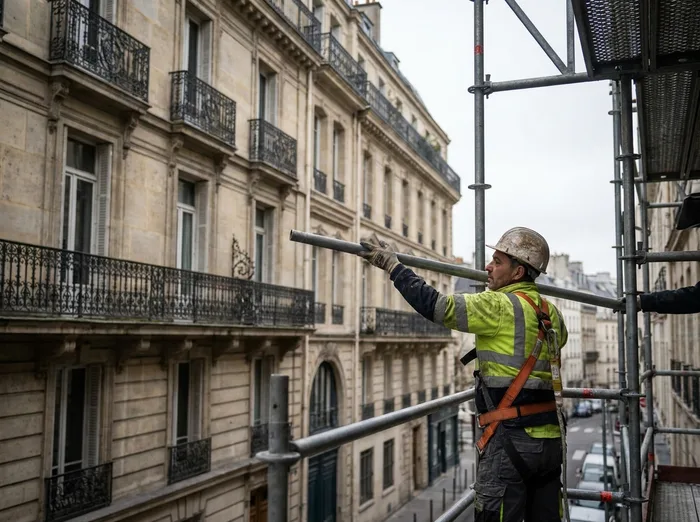
Scaffolding in Luxembourg: Small Market, Specific Demand
Welcome to your clear guide for finding scaffolding work in Luxembourg. If you are a skilled construction worker from outside the European Union, you might be looking at Luxembourg because of its strong economy and high average wages. But let us be honest right from the start. Luxembourg is a geographically tiny country with a small total population. While there is steady construction activity across the country, the total number of open scaffolder positions at any given time is much smaller than in neighboring nations.
If your primary goal is simply to get to Europe quickly on a scaffolding contract, larger industrial countries like Germany or Belgium offer far more open positions due to their massive manufacturing bases and expansive cities. However, if you are specifically targetting Luxembourg, employers here do hire foreign scaffolders, especially for major commercial, residential, and industrial projects. You just need to know how the visa process works, what local employers expect on site, and where to find the work.
Key Hiring Regions and Industrial Hubs in Luxembourg
Scaffolding demand in Luxembourg is concentrated in a few key urban, industrial, and commercial development zones across the country:
- Luxembourg City (Kirchberg and Cloche d'Or): Kirchberg is the financial and European Union district, while Cloche d'Or is a rapidly growing commercial area. Both feature high-rise office buildings, institutional headquarters, and apartment blocks. Scaffolding crews here assemble complex modular system scaffolding for large multi-story builds.
- Esch-sur-Alzette and Belval: Located in the south, Belval is a former industrial steel site transformed into a massive modern university, research, and business hub. Continuous urban redevelopment here creates strong demand for heavy duty scaffolding and facade protection systems.
- Differdange and Dudelange: Situated along the southern industrial belt, these towns house active steel mills and fast-expanding residential neighborhoods. Industrial scaffolding for factory maintenance and multi-family housing construction happens regularly in these areas.
- Bettembourg and Nordstad: Bettembourg is a major logistics and rail freight hub, while Nordstad (covering Ettelbruck and Diekirch) serves as the urban core of the north. Both regions periodically recruit specialized scaffolding crews for warehouse construction and regional infrastructure projects.
The ADEM Process and Work Permits for Non-EU Scaffolders
If you come from outside the EU (such as South Asia, Africa, Latin America, the Balkans, or Central Asia), you cannot simply enter Luxembourg on a tourist visa and start looking for work. You must secure a formal job offer first, and your employer must fulfill specific legal requirements before you travel.
- The ADEM Market Test: Before hiring a non-EU worker, a Luxembourg employer must formally register the scaffolding vacancy with ADEM (Agence pour le développement de l'emploi), the national employment agency. ADEM verifies whether any qualified resident in Luxembourg or citizen of the EU is available to fill the position.
- The ADEM Certificate: If no suitable candidate is found within three to four weeks, ADEM issues a certificate to the employer. This document grants the employer legal permission to sponsor a specific candidate from outside the EU for a salaried work permit (autorisation de séjour pour travailleur salarié).
- Temporary Residence Authorization: Once you receive your signed contract and the ADEM approval, you must submit your application for a temporary residence authorization to the Luxembourg Immigration Directorate while you are still in your home country.
- Entry Visa and Registration: After your authorization is granted, you apply for a Type D national visa at the nearest Luxembourg embassy or consulate. Upon arriving in Luxembourg, you must undergo a mandatory medical check, register at the local municipal office (administration communale) within three days, and receive your final residence permit (titre de séjour).
The whole process from job offer to arriving in Luxembourg usually takes between three and six months.
Certifications, Safety Standards, and Site Requirements
Luxembourg construction sites strictly enforce European safety standards. To work safely and efficiently, you must prove your technical capabilities and safety training to site directors.
- Training Benchmarks (IFSB): The Institut de Formation Sectoriel du Bâtiment (IFSB), located in Bettembourg, sets the training standards for building trades in Luxembourg. While foreign workers do not necessarily need an IFSB diploma prior to arrival, employers expect equivalent competence in scaffolding assembly and disassembly (montage et démontage d'échafaudages).
- Working at Height Certification: You must hold a valid working at height certificate. Employers look for documented training on personal protective equipment (PPE), safety harness usage, fall arrest systems, and secure anchor point verification.
- Accident Insurance Rules (AAA): The Association d'assurance contre les accidents (AAA) regulates workplace safety in Luxembourg. Employers bear full liability for site safety, so they will strictly evaluate your knowledge of load calculations, guardrail setup, toe-board installations, and ground stability checks.
- Equipment Expertise: European construction relies heavily on standardized system scaffolding. You must demonstrate hands-on experience erecting modular systems such as Layher Allround, Peri Up, or Cuplok rather than traditional bamboo or simple tube-and-coupler frameworks.
Language Reality, Pay Scales, and Seasonal Cycles
Working in Luxembourg requires a realistic understanding of spoken site languages, local wage structures, and climate impacts on construction work.
- Language Requirements: French is the primary operational language on construction sites throughout Luxembourg. Site supervisors, safety inspectors, and crane operators communicate mainly in French. Crews also commonly speak Portuguese or Spanish. English alone is rarely sufficient for basic site safety instructions, so learning basic French trade terms is critical.
- Collective Wage Tiers: Scaffolding work is governed by the national collective bargaining agreement for the construction sector (Convention Collective de Travail du Bâtiment). Pay is tied to the legally mandated minimum social wage (Salaire Social Minimum), which distinguishes between unskilled and skilled workers.
- Typical Net Pay Range: An entry-level or unskilled foreign scaffolder can expect a starting net monthly wage between 2,100 EUR and 2,300 EUR after taxes. An experienced scaffolder holding verified trade qualifications (salarié qualifié) typically earns between 2,500 EUR and 2,900 EUR net per month. Exact net amounts depend on your personal tax class (single vs married) and paid overtime hours.
- Hiring Cycles and Weather: Primary recruitment occurs from March to October when structural construction operates at full capacity. Hiring slows down dramatically from November through February due to winter weather conditions. Furthermore, Luxembourg mandates official collective holidays (congé collectif), during which most building sites shut down completely for several weeks in August and over the winter holidays.
Reality Check: What Workers Often Get Wrong
- Thinking English is enough for site work: Safety briefings and daily coordination happen almost exclusively in French. Lacking basic French puts your safety and job performance at risk.
- Expecting to switch visas after arrival: You cannot travel to Luxembourg as a tourist and convert your status to a work permit locally. The entire application must be approved before you travel.
- Underestimating accommodation costs: Rent in Luxembourg is among the highest in Europe. Many foreign scaffolders commute from border towns in France (like Thionville) or Germany (like Trier), or they arrange shared staff housing directly through their employer.
- Assuming trade rules are informal: Scaffolding in Luxembourg requires strict adherence to structural blueprints and safety laws. Uncertified modifications to a scaffold structure can lead to immediate site suspension.
Put Your Specific Details into Your Workuro Profile
Employers and recruiters across Luxembourg use Workuro to find qualified non-EU candidates who meet their exact technical needs. To ensure your profile appears near the top when Luxembourg site managers search for scaffolders, update your profile with specific, accurate details:
- List your exact trade certificates: Clearly detail your working at height tickets, safety certifications, and scaffolding diplomas.
- Specify your equipment experience: Name the exact system scaffolding brands you know how to build, such as Layher, Peri, or Ringlock.
- Include your language skills: Honestly list your French level, even if it is elementary, along with any Portuguese, Spanish, or English you speak.
- Select target locations: Choose Luxembourg along with specific industrial hubs like Luxembourg City, Esch-sur-Alzette, or Bettembourg so local recruiters can locate your profile easily.
Keep your Workuro profile complete, detailed, and accurate so employers looking for qualified scaffolding workers can easily match your experience to their open positions.
Готові, щоб вас знайшли?
Створіть профіль за 2 хвилини. Безкоштовно, без картки.
Читати далі