Hotel and Hospitality Worker Jobs in Finland for Foreign Workers (2026)
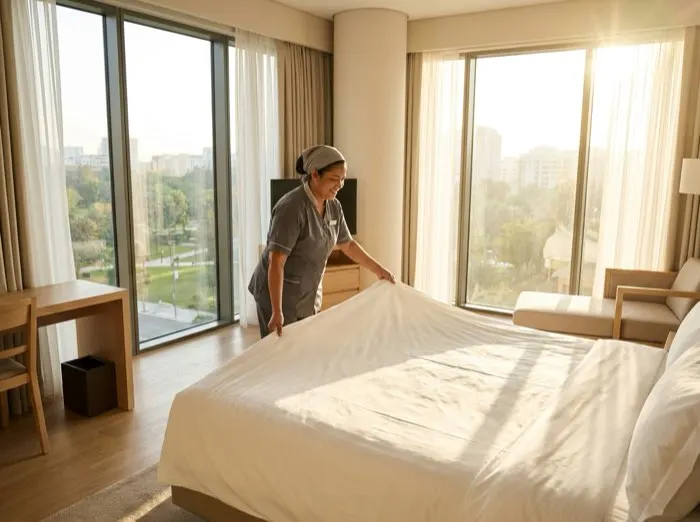
Demand for hotel and hospitality staff in Finland
If you are looking for work in Finland from outside the European Union, the hospitality sector offers real opportunities, but the demand is concentrated in very specific locations and months. Finland does not have a general shortage of entry-level hotel staff in every small town year-round. Instead, the market operates on dramatic seasonal surges alongside a steady baseline in major cities.
The largest recruitment push happens in Finnish Lapland for the winter season. From late October through March, tourism centers experience a massive influx of international travelers. Destinations such as Rovaniemi, Kittila (which serves the Levi resort), Kolari (serving Yllas), and Inari (serving Saariselka) hire thousands of seasonal workers. During this period, local labor is simply not enough, and Finnish employers actively look for foreign housekeepers, kitchen assistants, line cooks, and resort servers.
Outside of Lapland, year-round hospitality demand exists mostly in the Uusimaa region, which covers the Helsinki metropolitan area (including Vantaa and Espoo), as well as major regional hubs like Tampere in Pirkanmaa and Turku in Southwest Finland. In these urban centers, large hotel chains and event venues maintain standard recruitment cycles, with a smaller summer surge between May and August. If you cannot work seasonal winter hours in northern resorts, focusing on urban hotel chains in Helsinki is your best strategy.
Work permits and legal routes for non-EU workers
To work legally in Finland as a citizen of a non-EU country, you must hold a valid residence permit that allows employment. You cannot travel to Finland on a tourist visa and begin working. The entire application process is handled through Migri, the Finnish Immigration Service, and you must apply before arriving in the country.
There are two primary permit categories used for hospitality workers from outside the EU:
- Seasonal Work Permit (Sesongintyolupa): This permit is used for seasonal resort contracts lasting up to nine months, common in Lapland winter operations. The application is faster than a standard work permit, but it ties your legal stay directly to the seasonal contract duration.
- Residence Permit for an Employed Person (Tyontekijan oleskelulupa): This is the standard route for long-term or year-round roles in hotels and restaurants. This process involves two steps: first, the regional Employment and Economic Development Office (TE-toimisto) performs a labor market assessment to check if an EU resident could fill the role, and second, Migri verifies your background and job contract.
Processing times with Migri typically range from one to three months when submitted online through the Enter Finland portal. Your employer must fill out their portion of the application online, detailing your wage, working hours, and contract terms. Never travel to Finland expecting to work until your physical residence permit card has been printed and delivered to you.
Required certificates: Hygieniapassi and Annoskortti
Finland enforces strict health and safety standards across the entire hospitality industry. To work anywhere food or alcohol is handled, you will need official Finnish credentials. You do not always need these certificates before applying, but employers strongly prefer candidates who understand what is required or who already hold them.
- Hygiene Passport (Hygieniapassi): Overseen by Ruokavirasto, the Finnish Food Authority, this certificate is legally required if you handle unpacked, perishable food for more than two months. This applies to kitchen porters, chefs, buffet attendants, and food servers. The passport is earned by passing a written, multiple-choice proficiency test administered by certified instructors across Finland. Tests are regularly offered in English.
- Alcohol Passport (Annoskortti): Overseen by Valvira, the National Supervisory Authority for Welfare and Health, this certificate proves your knowledge of Finnish alcohol legislation. If you serve alcoholic beverages in a hotel bar or restaurant, your employer will require you to hold this qualification or take the test shortly after arrival.
If you have worked in hospitality in your home country, your foreign qualifications do not automatically satisfy Finnish legal requirements for food safety or alcohol service. You must take the local Finnish proficiency tests once you arrive or through accredited testing centers.
Pay rates, collective agreements, and net income
In Finland, minimum wage is not set by a single nationwide government law. Instead, wages in the hospitality sector are governed by a nationwide collective agreement (Tyoehtosopimus, or TES) negotiated between the service sector union PAM (Palvelualojen ammattiliitto) and the employer organization MaRa. Every hotel and restaurant employer must pay at least the wage floor set in this agreement.
Hospitality wages are based on job difficulty groups and your years of documented experience in the trade:
- Base hourly rates: Entry-level housekeeping and kitchen support roles typically start between 11.20 Euros and 12.50 Euros per hour gross. Experienced cooks, shift leaders, and front-desk agents earn between 12.80 Euros and 15.00 Euros per hour gross.
- Mandatory shift supplements: The collective agreement mandates extra pay for non-standard hours. You receive evening bonuses (usually paid between 18:00 and 24:00), night bonuses (paid between 00:00 and 06:00), and a 100 percent pay surcharge for working on Sundays and official public holidays.
- Monthly gross earnings: A standard full-time schedule is 112.5 hours over a three-week period (roughly 37.5 hours per week). Full-time monthly gross pay typically ranges from 1,900 Euros to 2,500 Euros, though workers who work frequent night shifts or Sunday hours can earn more.
- Net monthly pay after tax: Finland uses a progressive tax system. Non-EU workers on seasonal or year-round permits are taxed based on their total annual income in Finland. For a full-time hotel worker earning a gross salary of 2,100 Euros per month, typical deductions for income tax, pension, and unemployment insurance leave a net monthly pay of roughly 1,550 Euros to 1,750 Euros.
Language requirements across different roles
Language requirements in Finnish hotels vary significantly depending on the department you work in and the location of the hotel.
In kitchen departments (dishwashing, line cooking, prep work) and housekeeping teams, English is widely spoken and accepted as the working language. This is especially true in Lapland winter resorts and larger international hotel properties in Helsinki. Many hospitality teams in Finland are highly multicultural, and clear spoken English is often all you need to get hired for back-of-house roles.
For front-desk staff, concierge positions, and direct customer-service roles in cities like Helsinki, Tampere, or Turku, employers generally require conversational Finnish (level B1 or higher) alongside English, as local business travelers and domestic tourists expect service in Finnish. However, high-season tourist hotels in Lapland frequently hire English-only speaking reception staff to serve international charter flights.
Reality check: What foreign workers get wrong about Finland
- Expecting year-round work from seasonal hiring: A winter contract in Levi or Rovaniemi runs from November to March. When April arrives, northern resort hotels scale down operations dramatically. You cannot stay in Finland after your seasonal permit expires unless you secure another contract and permit.
- Underestimating accommodation arrangements: Housing in Lapland tourist towns is limited. Good employers arrange shared staff housing, but rent is deducted from your monthly salary (typically 300 Euros to 500 Euros per month for a shared room). Always confirm housing details before signing a contract.
- Assuming foreign hotel certificates bypass local rules: Holding a hospitality diploma from your home country is helpful, but it does not replace the mandatory Finnish Hygieniapassi test required by Ruokavirasto.
- Expecting cash payments or informal hours: Finnish labor laws are strictly enforced. All wages must be paid into a valid bank account, and work shifts are tracked under the PAM collective agreement rules.
How to feature these details on your Workuro profile
When employers in Finland search the Workuro registry for hotel and hospitality staff, they look for candidates who demonstrate clear preparation and understand local operational needs. To make your profile stand out to Finnish hospitality recruiters, keep these specific details updated:
- Specify your target regions: State clearly whether you are available for seasonal resort work in Lapland (such as Rovaniemi, Kittila, or Inari) or year-round city roles in Uusimaa (Helsinki area).
- Highlight relevant credentials: If you already hold a Hygieniapassi from Ruokavirasto or an Annoskortti alcohol certificate, list them explicitly. If you do not have them yet, state that you are ready to take the tests upon arrival.
- Detail your language skills: Clearly list your spoken English level. If you know basic Finnish or Swedish phrases, mention that as well.
- List specific hotel roles: Avoid vague job titles. Clarify whether your primary experience is in housekeeping, dishwashing, prep cooking, line cooking, or front-desk service.
A complete, detailed Workuro profile ensures that Finnish employers searching for prepared foreign workers can find your information quickly during their main recruitment drives.
کیا آپ تلاش کے لیے تیار ہیں؟
2 منٹ میں اپنا پروفائل بنائیں۔ مفت، کوئی کریڈٹ کارڈ نہیں۔
مزید پڑھیں