Welder Jobs in France for Foreign Workers (2026)
 France
Why France Needs Skilled Welders in 2026
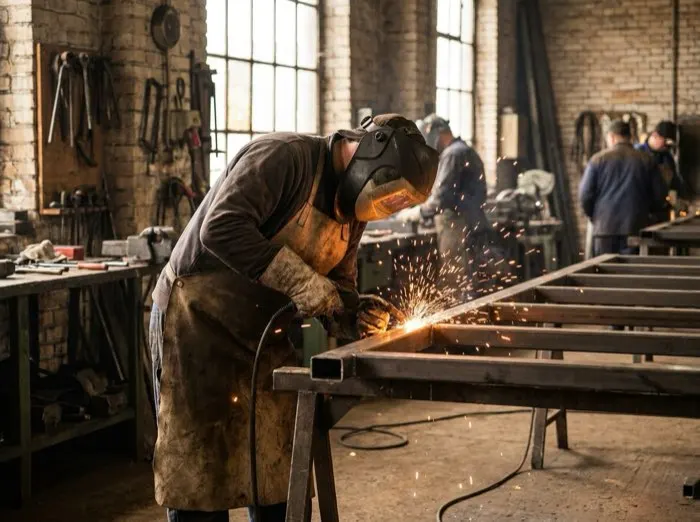
If you are a skilled welder living outside the European Union, France is one of the most promising countries for your career in 2026. The French industrial sector is facing a massive shortage of qualified metalworkers. From massive naval shipyards to the construction of new nuclear reactors, French employers are struggling to find local workers to fill these roles. Because of this, the French government classifies welding as a shortage occupation, known locally as a métier en tension.
This shortage works in your favor. It means the French government has simplified the hiring process for foreign workers. Normally, a French employer must prove they could not find a French or EU citizen to do the job before they can hire from abroad. For welders, this step is bypassed in almost every region of France. If you have the right skills, a valid certification, and an employer willing to hire you, the path to a French work permit is wide open. You do not need to look elsewhere; France has a massive, ongoing need for your hands-on skills.
The Best Regions and Industries for Welding Jobs
Welding jobs in France are not concentrated in one single city. Instead, they are spread across several major industrial hubs. Knowing where these hubs are will help you target your job search and understand where you might live. Here are the primary regions where French employers are actively looking for foreign welders:
- The Loire-Atlantique Region (Saint-Nazaire): This area on the west coast of France is home to some of the largest shipyards in Europe, including Chantiers de l'Atlantique. They build massive cruise ships and naval vessels. Employers here are constantly hiring TIG and MIG/MAG welders to work on steel and aluminum hulls.
- Normandy (Cherbourg and Le Havre): Cherbourg is a major center for naval defense and submarine construction. Additionally, Normandy is a hub for France's nuclear energy sector. With the planned construction of new EPR nuclear reactors, the demand for high-precision pipe welders in this region is at an all-time high.
- Hauts-de-France (Dunkirk and Valenciennes): Located in the north, this region is the heart of the French automotive and heavy railway industries. Dunkirk is also transforming into a major hub for green energy, including wind turbine manufacturing, which requires heavy-duty structural welding.
- Auvergne-Rhone-Alpes (Lyon and Grenoble): This region has a dense network of chemical plants, piping systems, and heavy machinery manufacturers. It is an excellent destination for specialized industrial pipe welders who can work in tight spaces and handle high-pressure systems.
Required Welding Certifications in France
In France, you cannot simply walk onto a job site and start welding. Safety and quality standards are incredibly strict. To work legally and safely, you must hold certifications that align with European standards. The absolute gold standard for welding in France is the EN ISO 9606-1 certification for steel, or EN ISO 9606-2 for aluminum.
These certifications are issued by international testing bodies. In France, the most recognized organizations that validate these certificates are Apave, Bureau Veritas, and the Institut de Soudure. If you already hold an ISO 9606 certificate from your home country, make sure it is up to date. Many French employers will still ask you to perform a practical welding test, often called a licence de soudure, on your very first day to verify your skill level.
The most in-demand welding processes in France are:
- TIG Welding (Process 141): Highly valued for stainless steel and thin pipes, especially in the food, chemical, and nuclear industries.
- MIG/MAG Welding (Process 131, 135, 136): The most common process used in heavy manufacturing, steel construction, and shipbuilding.
- MMA / Stick Welding (Process 111): Used mostly for outdoor construction, pipeline work, and structural maintenance.
The Work Permit Route for Non-EU Welders
As a worker from South Asia, Africa, Latin America, the Balkans, or Central Asia, you will need a work permit and a visa to enter France. The process is straightforward but requires patience, taking anywhere from two to four months to complete. Here is how the process works:
- Step 1: The Job Offer. You must first secure a formal job offer from a French employer. The employer must draft a contract that complies with French labor laws.
- Step 2: Work Authorization (Autorisation de Travail). Your employer will submit an online application to the French Ministry of the Interior. Because welding is a shortage occupation, the employer does not need to advertise the job locally first. They must show your certifications and prove they are paying you a fair wage.
- Step 3: The Visa Application. Once the work authorization is approved, the government sends an official document to your employer and to the French consulate in your home country. You will then book an appointment at the nearest French embassy or visa application center (such as VFS Global) to apply for your long-stay visa (VLS-TS).
Remember, you cannot travel to France on a tourist visa and try to convert it to a work permit. The entire process must be initiated while you are still in your home country.
Language Skills, Salaries, and Hiring Cycles
One of the biggest worries for foreign welders is the language barrier. Do you need to speak fluent French? The short answer is no, but you do need some basics. On a French industrial site, safety is the number one priority. You must be able to understand safety signs, follow technical drawings, and comprehend instructions given by your team leader. A basic conversational level of French (A2 level) is highly recommended. If you only speak English, your options will be limited to large, international projects, but even there, knowing basic French words for tools and safety will give you a huge advantage.
When it comes to pay, France operates under a system of collective agreements called Conventions Collectives. In the metalworking sector, the Convention Collective de la Métallurgie guarantees minimum pay rates based on your experience and qualification level. Here is what you can realistically expect to earn:
- Entry-Level / Basic MIG-MAG Welder: Between €1,700 and €1,900 net per month after taxes.
- Experienced TIG / Pipe Welder: Between €2,100 and €2,600 net per month after taxes.
- Specialized Nuclear or High-Pressure Welder: Between €2,700 and €3,500 net per month after taxes, often with extra bonuses for travel and difficult working conditions.
Hiring for welders happens year-round, but there are specific peaks. The spring and autumn seasons are known for major maintenance shutdowns, called arrêts de tranche, in chemical plants and nuclear power stations. During these periods, employers hire hundreds of temporary welders for intense, high-paying, short-term contracts.
Reality Check: What People Get Wrong
It is easy to get confused by online rumors. Let us look at the facts of what to expect when planning your move:
- Wrong: "I can work with my home-country certificates without any verification." Reality: French employers almost always require an practical test on-site before you touch a real workpiece. If you fail the test, you cannot start the job.
- Wrong: "The employer will pay for my family to move with me immediately." Reality: In most cases, you will move to France alone first. Once you have completed your trial period and secured stable housing, you can apply for family reunification, which can take over a year.
- Wrong: "I can easily find a job without any written contract." Reality: Working without a contract (black market work) is highly illegal in France. It can lead to immediate deportation and a ban from entering Europe. Always insist on a formal, written contract.
How to Set Up Your Workuro Profile for French Employers
French employers are actively searching for skilled international welders, and they use Workuro to find them. To make sure your profile appears at the top of their search results, you must be highly specific.
Do not just write "Welder" in your title. Instead, list your specific welding processes (such as TIG 141 or MIG-MAG 135) and your certifications (like EN ISO 9606-1). Clearly state which French regions you are willing to move to, such as Normandy or Pays de la Loire. Finally, be honest about your language skills; even if you only know basic French, listing it shows employers you are willing to learn. A complete, detailed profile is your ticket to getting noticed by French companies ready to sponsor your work permit in 2026.
کیا آپ تلاش کے لیے تیار ہیں؟
2 منٹ میں اپنا پروفائل بنائیں۔ مفت، کوئی کریڈٹ کارڈ نہیں۔
مزید پڑھیں