Welder Jobs in Greece for Foreign Workers (2026)
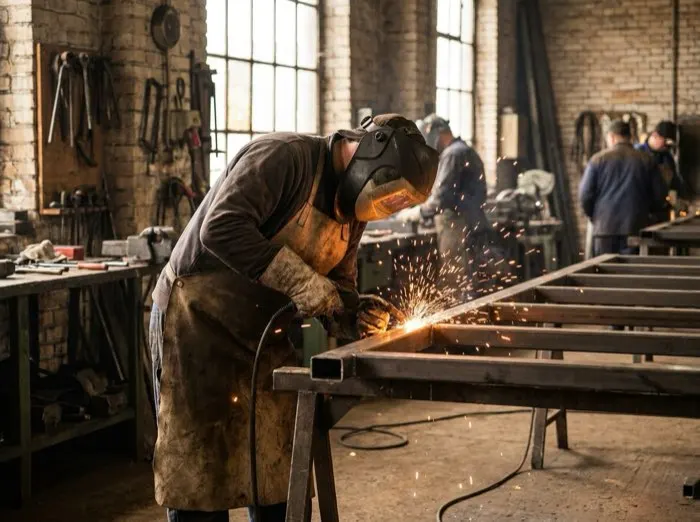
If you are a welder from outside the European Union - whether you live in South Asia, North Africa, Sub-Saharan Africa, Latin America, the Balkans, or Central Asia - Greece offers real job opportunities. The Greek industrial landscape relies heavily on skilled manual trade workers. The country is currently experiencing a noticeable shortage of qualified welders, especially in maritime repair, structural engineering, and pipeline infrastructure.
You do not need to figure out this path alone. In this guide, you will learn where the work is located, how the Greek legal visa system functions, what certifications Greek employers want to see, and what kind of net monthly salary you can take home.
Welding Demand in Greece: Where the Work Really Is
Greece does not have the massive automotive assembly lines you find in Germany or Poland. Instead, industrial welding demand in Greece centers on heavy marine work, structural steel fabrication, pressure vessel production, and public infrastructure projects.
The core engine of Greek welding demand is maritime repair and shipbuilding. Greece controls one of the largest merchant shipping fleets in the world. Thousands of vessels enter Greek waters every year for routine maintenance, emergency repair, and retrofits. Marine welding requires precise skills in multi-pass plate and pipe welding, working with specialized metals under tough physical conditions.
Beyond the coast, Greek workshops produce structural steel frameworks for commercial buildings, warehouse construction, agricultural processing facilities, and highway bridges. The country is also upgrading energy pipelines and gas storage networks, which keeps high-pressure pipe welders consistently busy.
Because young workers in Greece have largely shifted toward service and tourism industries over the last two decades, industrial workshops face a shortage of trade talent. Local employers actively look to recruit foreign welders who possess proven practical experience.
Top Regions and Cities Hiring Foreign Welders
Welding jobs in Greece are concentrated in specific coastal industrial zones and manufacturing districts. Knowing these regions helps you narrow your focus when planning your career move.
- Perama and Elefsina (Attica Region): Located just west of Athens, this is the historic center of Greek ship repair. The shipyards of Elefsina and the repair zone of Perama host hundreds of marine contracting businesses. They hire TIG, MIG/MAG, and Flux-Cored Arc Welders (FCAW) continuously.
- Skaramagas (Attica Region): Home to massive industrial dockyards capable of handling large commercial ships and naval vessels. Employers here look for certified pipe and heavy plate welders.
- Sindos Industrial Area (Thessaloniki): Located in northern Greece, Sindos is one of the largest industrial parks in the Balkans. Hundreds of fabrication companies operate here, focusing on structural steel, agricultural machinery, and storage tanks.
- Volos (Thessaly Region): A key port city in central Greece with a strong tradition of industrial manufacturing, heavy steel construction, and boiler manufacturing.
- Syros Island (Cyclades): Syros houses the famous Neorion Shipyard, one of the oldest active dockyards in Greece. It hires international marine welders for year-round vessel repair.
The hiring season in Greece depends on the sector. Marine repair experiences a major peak between October and April, when commercial vessels enter drydocks for winter maintenance and refitting. Structural steel construction and pipeline projects peak during the spring and summer months when weather conditions are clear.
The Metaklisi Work Permit Process Explained
To work legally as a non-EU citizen in Greece, you must follow the official entry and work permit system known as Metaklisi (Μετάκληση). You cannot start work on a tourist visa or come to Greece looking for work after arriving. The entire process begins with an employer in Greece.
Here is how the legal hiring process works step by step:
- Step 1: Employer Application. The Greek company applies to their local Decentralized Administration (Apokentropomeni Dioikisi) for permission to hire a specific non-EU worker to fill a vacant role that could not be filled locally.
- Step 2: Permit Approval. Once the regional authorities approve the employer request, the decision is sent to the Greek embassy or consulate in your home country.
- Step 3: National Visa D. You attend an interview at the Greek consulate with your official employment contract, clean criminal record, medical certificate, and passport to receive a long-stay Visa D.
- Step 4: Arrival and Residence Permit. After landing in Greece, your employer registers you with the Ministry of Migration and Asylum to receive your biometric residence card (Adeia Diamonis).
- Step 5: Tax and Social Security Registration. You are issued a Greek Tax Identification Number (AFM) and a Social Security Number (AMKA) so your employer can pay your monthly wages legally.
The Metaklisi procedure usually takes between three and six months from the day your employer submits the paperwork until you land in Greece.
Welding Certifications Recognized in Greece
Greek employers rely heavily on European technical standards to assess your skill level before offering a contract. Holding recognized certificates speeds up your hiring process significantly.
- ISO 9606-1 (Steel Welding): The standard test qualification for fusion welding of steels. Having valid certificates in 6G pipe position or 3G/4G plate position gives you a huge advantage.
- ISO 9606-2 (Aluminum Welding): Crucial for specialized marine workshops working on high-speed vessels and lightweight boat structures.
- Authorized Testing Bodies: Stamp approvals from recognized international certification bodies such as TÜV Hellas (TÜV Austria), Bureau Veritas, or Lloyd's Register are trusted immediately by Greek employers.
- Greek Technical License (Electrosygkolitis): For long-term residency, workers operating in industrial facilities are classified under local technical categories administered by the Ministry of Development. Your employer usually helps you convert your foreign credentials into the appropriate local trade classification.
Even if you hold international certificates, expect to perform a practical weld test on a test coupon upon arriving at a Greek shipyard or workshop. Employers always verify your root pass quality, penetration, and appearance in person before putting you on high-value jobs.
Salary Expectations and Working Conditions
Salaries in Greece are paid monthly. Your income depends on your specialization, certifications, and whether you work in standard manufacturing or maritime repair.
- Entry to Mid-Level Shop Welders (MIG/MAG, Structural Steel): Expect a net monthly salary of €900 to €1,200 after tax and social security deductions.
- Experienced Marine or Pipe Welders (6G TIG/FCAW, Pressure Vessels): Specialized welders working in shipyards earn between €1,300 and €1,900 net per month.
- Overtime and Allowances: Shipyard jobs often include heavy overtime hours, weekend shifts, and hazardous duty bonuses, which can raise total take-home pay past €2,100 net per month during busy repair periods.
Standard Greek labor contracts cover 40 hours per week. Under Greek labor laws, full-time employees are entitled to 14 monthly salary payments per year (a full extra month paid at Christmas, half a month paid at Easter, and half a month paid during summer vacation).
Reality Check: What Foreign Welders Get Wrong
It is easy to make wrong assumptions when looking for employment abroad. Keep these honest points in mind before starting your job search:
- Mistake 1: Expecting Northern European Salaries. Net wages in Greece are lower than in Scandinavian countries or Germany. However, accommodation and general cost of living in industrial Greek towns are lower as well.
- Mistake 2: Thinking You Can Arrive on a Tourist Visa. You cannot convert a tourist visa or short-stay Schengen visa into a Greek work permit inside the country. You must complete the embassy process in your home region.
- Mistake 3: Relying Only on Basic Welding. Basic stick welding (SMAW) jobs are limited and pay lower wages. The strongest demand and highest pay are for skilled TIG (Code 141) and Flux-Cored (Code 136/137) operators who can pass X-ray checks.
- Mistake 4: Ignoring Safety Standards. Greek workshops and shipyards enforcing European safety regulations require strict adherence to PPE standards, harness rules, and confined space safety.
- Mistake 5: Expecting English Everywhere. While engineering managers and shipyard supervisors speak English, basic Greek is spoken on everyday work floors. Learning basic workplace words in Greek helps you adapt much faster.
Build Your Workuro Profile to Target Greek Employers
Greek business owners and site managers do not want to wade through generic resumes. They need clear, precise details about what you can weld, which positions you are qualified for, and where you are willing to move.
When creating your Workuro profile, make sure you fill out these specific sections completely:
- Welding Processes: Specify your exact process numbers, such as 111 (SMAW), 135 (MAG), 136 (FCAW), or 141 (TIG).
- Certifications and Codes: List your ISO 9606 qualifications, pressure vessel certificates (PED), and the testing body that issued them. Upload clear photos of your valid test certificates.
- Welding Positions: State clearly if you are certified in 1G, 2G, 3G, 4G, 5G, or 6G positions.
- Target Regions in Greece: Select Attica (Perama, Elefsina), Central Macedonia (Thessaloniki), Thessaly (Volos), or the Aegean Islands (Syros) as your preferred work destinations.
- Language Skills: List your level of English and any basic Greek or other European languages you understand.
A detailed Workuro profile ensures Greek employers searching for certified non-EU welders can review your qualifications quickly and contact you with authentic employment offers.
Ready to be found?
Create your profile in 2 minutes. Free, no credit card.
Keep reading