Electrician Jobs in Lithuania for Foreign Workers (2026)
Electrician Demand in Lithuania: The Real Picture for 2026
Lithuania has experienced steady economic growth, with heavy investment in industrial manufacturing, logistics infrastructure, and renewable energy. This growth has created a consistent demand for skilled trade workers, including industrial and construction electricians. Because the local workforce alone cannot fill every open position, Lithuanian companies actively hire qualified trade workers from outside the European Union.
It is important to understand the scale of the market. Lithuania is a smaller country than neighboring Poland or Germany. You will not find tens of thousands of open positions at any single moment. However, the market for certified electricians is focused, reliable, and accessible for non-EU workers. The Lithuanian Employment Service, known locally as Užimtumo tarnyba, consistently maintains electricians on its list of shortage occupations (trūkstamų profesijų sąrašas). This shortage classification means the visa and work authorization steps for qualified foreign applicants are streamlined compared to non-shortage fields.
If you are looking for massive job volume or immediate placement without official qualification checks, larger markets like Poland may offer more total job listings. However, Lithuania offers attractive advantages: pay contracts are issued in Euros, employer relationships are usually stable, and obtaining a Temporary Residence Permit (TRP) provides a secure, legal footing inside the EU. If you hold verified electrical experience, are willing to follow certification procedures, and want a clear path into Northern Europe, Lithuania is a very strong option in 2026.
Certificates and Licences You Need in Lithuania
You cannot simply step onto a job site in Lithuania and begin connecting wires without recognized credentials. Lithuanian energy safety laws strictly regulate who can handle electrical infrastructure. To work legally, your technical skills and safety knowledge must be verified under local standards.
- VERT Safety Certification: The main governing body for energy sector workers is the National Energy Regulatory Council, known locally as VERT (Valstybinė energetikos reguliavimo taryba). Every electrician working on power grids, commercial sites, or industrial installations must hold a VERT electrical safety certificate (apsaugos atestatas). This certification verifies that you know safe working procedures and standard electrical regulations.
- Voltage Qualifications: Most entry jobs for foreign workers involve low-voltage systems up to 1000 volts (1000V). This includes interior wiring, industrial equipment hookups, and solar panel installations. Working on high-voltage lines or primary sub-stations requires higher category certifications and additional testing.
- Document Qualification Checks: Your foreign vocational diploma, trade certificate, or apprenticeship records must be translated into Lithuanian or English. Employers submit these documents to demonstrate your educational background. In some cases, educational credentials undergo formal assessment through the Centre for Quality Assessment in Higher Education (SKVC).
- Employer-Sponsored Testing: In practice, most hiring companies assist incoming foreign workers with the VERT examination. They often arrange safety training courses upon your arrival and present you for the test in Lithuanian, English, or Russian, depending on the test centre capabilities. Passing this test is mandatory before you can work independently on site.
- Driver Licence: Holding a valid Category B driver licence is an enormous advantage. Mobile installation teams often drive company vehicles between job sites, logistics parks, and solar projects.
Where the Jobs Are: Key Regions and Hiring Seasons
Electrical work in Lithuania is concentrated in specific industrial hubs, major cities, and renewable energy sites across the country. Understanding where projects take place helps you target your applications effectively.
- Vilnius Region: The capital city is a major hub for commercial construction, multi-story residential developments, modern office complexes, and data centres. Electricians here work heavily on internal conduit installation, distribution boards, lighting networks, and smart-building systems.
- Kaunas and Kaunas LEZ: Kaunas is Lithuania's primary industrial and manufacturing heartland. The Kaunas Free Economic Zone (Kauno LEZ) hosts automated factories, international automotive components plants, and massive distribution hubs. Electricians in Kaunas are frequently hired for industrial automation maintenance, cable tray fitting, control panel assembly, and motor wiring.
- Klaipėda and the Port Area: As Lithuania's main seaport on the Baltic coast, Klaipėda offers specialized work. Opportunities exist in shipbuilding, ship repair yards, marine electrical systems, port cranes maintenance, and industrial logistics facilities situated within the Klaipėda LEZ.
- Šiauliai and Panevėžys: These regional hubs in Northern Lithuania house heavy manufacturing, food processing facilities, and agricultural processing plants. Electricians here focus mainly on facility maintenance, machinery repair, and plant upgrades.
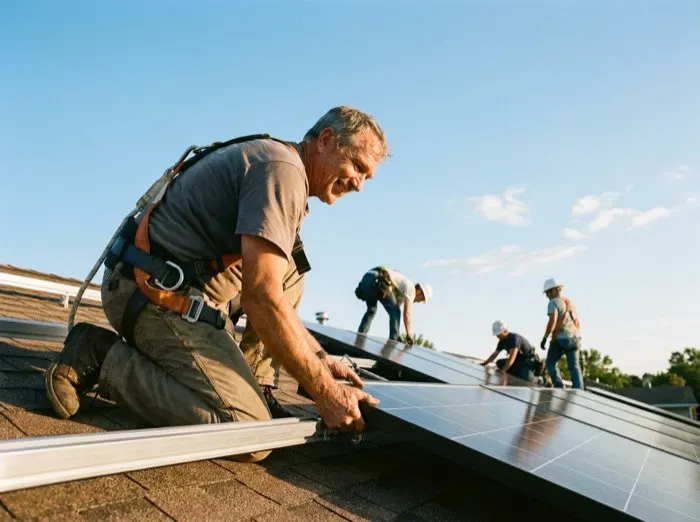
- Solar Energy Sites: Ground-mounted solar farms continue to expand across rural districts in Lithuania. Solar installation projects require large crews of electricians to install mounting hardware, pull heavy DC and AC cabling, assemble inverter stations, and connect fields to the regional grid.
- Hiring Cycles and Seasons: Outdoor solar farm builds, utility line work, and exterior construction peak between April and late October, when the ground is clear and daylight hours are long. Factory maintenance, indoor commercial fitting, panel building, and residential wiring hire continuously from January through December.
Pay, Tax, and Practical Living Conditions
Understanding pay structures in Lithuania is essential. Job listings and official contracts state pay in two different ways: gross pay (ant popieriaus, meaning before tax) and net pay (į rankas, meaning cash in hand after tax). Always make sure you understand which figure an employer is discussing.
- Realistic Monthly Net Pay: For a fully qualified foreign electrician working standard full-time hours (40 hours per week), realistic net pay generally ranges from 1,200 EUR to 1,800 EUR net per month. Specialist industrial control technicians or experienced panel builders can earn 2,000 EUR net or more.
- Overtime and Field Allowances: Work on outdoor solar projects or fast-track commercial developments often offers paid overtime. When projects require working far from your home base, employers typically provide a daily allowance (dienpinigiai) or cover accommodation costs directly.
- Taxes and Social Protection: Your employer automatically deducts Personal Income Tax (GPM) and State Social Insurance contributions (Sodra) from your salary. Sodra contributions give you direct access to the public healthcare system, paid sick leave, and workplace accident protection.
- Workplace Language Reality: While Lithuanian is the official national language, Russian and English are widely used across construction sites and industrial facilities. Many site supervisors and engineering managers speak fluent English or Russian. You do not need to speak fluent Lithuanian to land your first job, but learning basic technical terms in Lithuanian will help you advance quickly.
Work Permits and the MIGRIS Visa Process
Workers coming from outside the European Union (such as South Asia, Central Asia, the Balkans, Africa, or Latin America) require legal authorization to live and work in Lithuania. The entire process is managed electronically through the Lithuanian Migration Department portal, known as MIGRIS.
- Shortage Occupation Advantage: Because electricians are listed on the Užimtumo tarnyba shortage list, employers skip the lengthy local labor market advertising test. This significantly reduces the administrative waiting time.
- Employer Sponsorship: You cannot apply for a work visa or residence permit on your own without a real employer. The hiring company in Lithuania must first register an official mediation letter (Tarpininkavimo raštas) in the MIGRIS system, confirming your job role, guaranteed salary, and work location.
- Temporary Residence Permit (TRP): Most skilled trade workers apply directly for a Temporary Residence Permit for employment purposes. A TRP is usually issued for a period of one to two years and can be renewed. You submit your biometric data and original apostilled documents at a designated VFS Global center or Lithuanian embassy in your home region.
- Processing Timeline: From the moment you sign your employment agreement to the day your permit is approved, the administrative process typically takes between 2 and 4 months. Plan your transition with this timeline in mind.
Reality Check: What Foreign Electricians Get Wrong
- Expecting immediate independence: You will not be allowed to lead high-voltage projects or work alone on your first day. Every new foreign worker goes through safety orientation and operates under a supervisor until VERT testing is completed.
- Underestimating Baltic winter weather: Winters in Lithuania are cold, with temperatures regularly dropping below freezing between December and March. Outdoor cable laying or solar field work in winter requires specialized warm gear and tough physical resilience.
- Misunderstanding gross versus net figures: A salary quoted as 1,800 EUR gross will result in roughly 1,150 EUR to 1,200 EUR net in your bank account after standard tax and social security deductions. Always insist on seeing the net breakdown.
- Assuming English is spoken everywhere: While project engineers often speak English, local site workers and equipment operators often speak Lithuanian or Russian. Being comfortable using translation apps and learning practical local trade words is necessary.
Complete Your Workuro Profile to Get Found by Employers
Lithuanian hiring managers and international recruitment agencies actively search for qualified technical candidates through worker registries. To stand out and secure job offers, ensure your Workuro profile reflects the specific details Lithuanian employers look for.
Include your full trade history, detailing the exact electrical work you have performed. List your specific technical skills, such as reading blue prints, wiring control panels, laying low-voltage cables, or servicing industrial machinery. Be clear about the maximum voltage range you are qualified to handle, such as systems up to 1000V or high-voltage networks.
Make sure to specify any safety certificates, trade diplomas, or vocational qualifications you hold from your home country. Mention your English and Russian language levels clearly, and state whether you hold a valid Category B driver licence. Indicate your target work locations, including Vilnius, Kaunas, Klaipėda, or general industrial zones in Lithuania. A complete, detailed profile allows employers in Lithuania to verify your background quickly and contact you directly for open positions.
کیا آپ تلاش کے لیے تیار ہیں؟
2 منٹ میں اپنا پروفائل بنائیں۔ مفت، کوئی کریڈٹ کارڈ نہیں۔
مزید پڑھیں