Warehouse and Logistics Worker Jobs in Greece for Foreign Workers (2026)
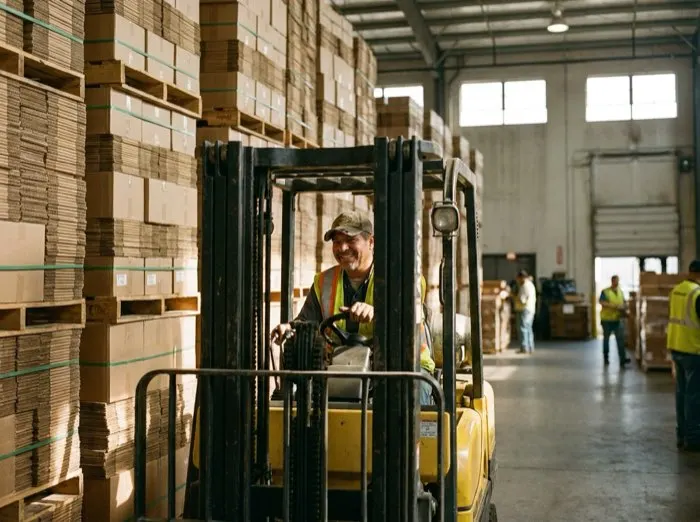
Logistics and Warehouse Work in Greece: What You Need to Know
Greece has rapidly transformed into a major entry point for goods entering Southeastern Europe. Driven by the expansion of the Port of Piraeus and major investments in freight rail, modern supply chain facilities have sprung up across the mainland. This growth creates a steady demand for warehouse staff, order pickers, materials handlers, and forklift drivers. If you are coming from a non-EU country in South Asia, Africa, Latin America, Central Asia, or non-EU Balkan states, there are clear legal pathways to work in this industry, provided an employer sponsors you before you arrive.
Demand for warehouse staff in Greece is genuine, but it is highly concentrated in specific industrial zones. It is not spread evenly across the country. If you want to move to Greece for warehouse work, you need to target the exact logistics parks where third-party logistics (3PL) providers, supermarket supply chains, and freight forwarders operate. Understanding how the hiring system works will save you time and help you secure a job legally.
Where the Jobs Are: Key Logistics Hubs and Seasons
Almost all large scale logistics activity in Greece happens within two major industrial corridors, along with a few regional agricultural centers. If you look for warehouse jobs outside these zones, you will find very few opportunities.
- Thriasio Plain (Attica): Located just northwest of Athens, the areas of Aspropyrgos, Elefsina, and Magoula form the heartbeat of Greek logistics. This region handles imports arriving through Piraeus. Major distribution centers for retail giants, e-commerce networks, and international freight operators are located here. This area hires year-round.
- Sindos Industrial Area (Thessaloniki): The VIPE Sindou zone outside Thessaloniki is the largest logistics and manufacturing hub in northern Greece. Facilities here manage trade routes running into the Balkans and Eastern Europe. Demand for general warehouse workers and equipment operators remains stable throughout the year.
- Patras and Central Greece: The port area of Patras serves as a logistics bridge to Italy and Western Europe, while locations like Oinofyta host large manufacturing warehouses that require steady inventory handling.
- Crete and Regional Agricultural Hubs: In regions like Heraklion (Crete) or Imathia, warehouse work centers on agricultural packaging, cold storage, and regional distribution. These locations follow a distinct season, with hiring peaking between May and October to match crop harvests and the tourist season rush.
For standard warehouse operations in Attica and Thessaloniki, peak hiring takes place from September to December to prepare for holiday e-commerce demands, with a secondary push in spring.
Licences, Qualifications, and Language Requirements
The requirements for warehouse roles depend heavily on whether you are applying as a general picker-packer or a heavy machinery operator. Knowing what qualifications apply in Greece helps you match your profile to employer expectations.
- General Warehouse Workers: Entry level roles such as order picking, packing, scanning, and loading do not require formal academic degrees. You must be physically capable of standing for long shifts and handling manual tasks safely.
- Forklift Operators (Clark Drivers): In Greece, powered industrial trucks and forklifts fall under regulated machinery rules. To drive a forklift legally, you need an Operator of Machinery licence (Άδεια Χειριστή Μηχανημάτων Έργου). This licence is classified under Speciality 1.3 for lifting equipment and is issued by the Regional Directorate of Industry under the Ministry of Development. Foreign licences from non-EU countries are not automatically recognized. You must present your existing certification and driving history to the local transport authority for conversion, which usually requires a practical evaluation.
- Health Certificates (Pistopoiitiko Ygeias): If you work in a warehouse that handles food, beverages, or pharmaceuticals, Greek law requires you to hold a valid health certificate. This is obtained after simple medical checks (such as a chest X-ray) carried out through a public medical facility or certified clinic in Greece.
- Language Expectations: In major 3PL distribution centers around Aspropyrgos and Sindos, management teams often communicate in basic English, and warehouse management software (WMS) screens are configured in English. However, knowing basic Greek is a massive advantage for daily workplace safety and team communication. If you are applying for local supermarket warehouses, functional Greek is usually mandatory.
Wages, Contracts, and Net Monthly Pay in 2026
Pay structures in Greece are calculated on a gross basis by law, but you will care most about your net monthly income after taxes and social security contributions (EFKA) are deducted. A unique feature of Greek employment law is that full-time private sector employees receive 14 salary payments per year rather than 12. You receive an extra month of pay at Christmas, half a month at Easter, and half a month for your summer holiday allowance.
- General Warehouse Staff: Standard entry level wages for pickers and inventory handlers align with the national minimum wage standards. For a basic 40-hour work week, net monthly pay typically ranges between €700 and €850 on a 14-payment structure. Calculated over 12 months, this equals roughly €800 to €980 net per month.
- Licensed Forklift Drivers: Skilled machinery operators earn higher pay scales due to the required technical certification. Net monthly pay generally falls between €850 and €1,100, depending on shift arrangements and night work allowances.
- Overtime and Shifts: Night shifts, Sunday work, and official overtime are governed by strict labor regulations and carry mandatory pay markups ranging from 25 percent to 75 percent over standard hourly rates.
The Work Visa Process: Understanding Metaklisi
Foreign workers coming from outside the EU cannot simply arrive in Greece and look for work. You must follow the official employer-sponsored pathway known as **Metaklisi** (μετάκληση).
Under this system, the Greek government publishes regional quotas defining how many foreign workers can be recruited in specific sectors based on local labor market needs. Here is how the legal process works step by step:
- Job Offer and Quota Approval: A Greek employer applies through their local Decentralized Administration (Apokentropomeni Dioikisi) to recruit a specific worker from outside the EU for an open position in their warehouse.
- Approval and Document Dispatch: Once the regional authority approves the request, the approval is sent directly to the Greek embassy or consulate in your home country.
- Visa Application (Type E.1): You attend an interview at the Greek consulate with your employment contract, clean criminal record certificate, medical clearance, and passport to receive a National Visa (Type D / E.1 for dependent employment).
- Arrival and Residence Permit: Upon entering Greece, your employer completes your registration with the social security authority (EFKA) and tax office to get your tax number (AFM) and social security number (AMKA). You then submit your biometric data to obtain your formal Residence Permit for work.
Reality Check: What Workers Often Get Wrong
- Myth: You can enter on a tourist visa and start working legally. Reality: It is impossible to convert a tourist visa or short-term Schengen visa into a legal work permit inside Greece. You must receive visa authorization through a Greek embassy in your home country before you travel.
- Myth: Non-EU forklift certificates work immediately. Reality: You cannot operate heavy machinery legally on Greek job sites using only a foreign licence. Your employer must assist you in converting your credentials through the regional Ministry of Development office.
- Myth: Greek logistics pay is identical to Northern Europe. Reality: Wages in Greece are lower than in Germany or the Netherlands. However, living costs in regional logistics hubs outside central Athens are also lower, and legal employment provides full access to public healthcare and social protections.
- Myth: Warehouse jobs are available everywhere in Greece. Reality: Tourist islands and small rural towns have almost no industrial warehouse operations. Over 80 percent of logistics roles are concentrated in Attica and Thessaloniki.
Put Your Specifics into Your Workuro Profile
Employers hiring through Workuro search for candidates who match exact operational needs. To make your profile stand out to Greek companies and recruitment agencies, make sure you include precise details rather than general statements.
List your exact technical skills, including the machinery models you can operate (reach trucks, counterbalanced forklifts, electric pallet jacks) and any experience you have with Warehouse Management Systems (WMS) or handheld barcode scanners. Mention your language proficiency levels clearly in both English and Greek, and specify the exact regions where you are ready to relocate, such as Aspropyrgos, Elefsina, or Thessaloniki. Adding these specific details ensures your profile appears whenever an employer searches for qualified warehouse candidates.
کیا آپ تلاش کے لیے تیار ہیں؟
2 منٹ میں اپنا پروفائل بنائیں۔ مفت، کوئی کریڈٹ کارڈ نہیں۔
مزید پڑھیں