Cleaner and Housekeeping Jobs in Portugal for Foreign Workers (2026)
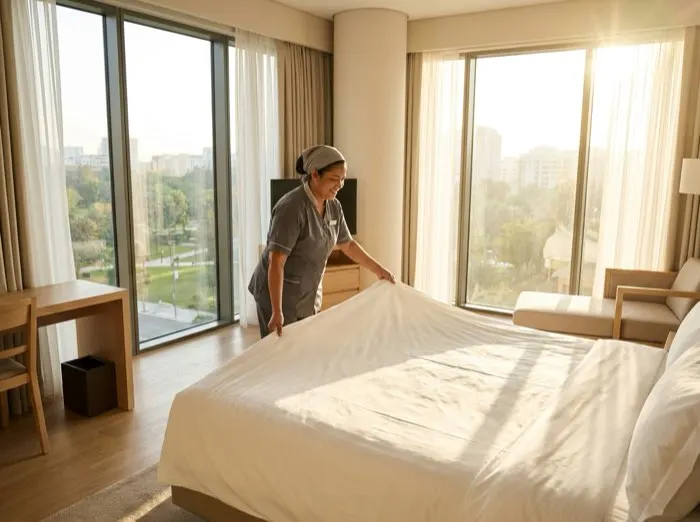
If you are planning to move to Portugal as a non-EU worker to work in cleaning or housekeeping, you are looking at a market with steady demand. Portugal relies heavily on international workers to support its huge tourism industry, private residential sectors, and commercial services. However, the legal landscape in Portugal changed significantly recently, so understanding how to enter the country legally and where the best job opportunities exist is essential for your success.
This guide explains where cleaning jobs are concentrated, what local contracts pay, what visas you need, and how to position yourself so Portuguese employers can hire you directly.
Where the Cleaning and Housekeeping Jobs Are in Portugal
Demand for cleaning and housekeeping staff in Portugal varies depending on the region and the season. Knowing where to look helps you plan your job search much more effectively.
- The Algarve (Faro, Albufeira, Portimão, Lagos): This southern coastal region is the heart of Portuguese tourism. Demand here for hotel housekeepers, villa cleaners, and resort staff is extremely high between April and October. Many luxury resorts hire large teams of housekeepers every spring. Winter hiring drops significantly, though some year-round maintenance and hotel roles exist.
- Lisbon Metropolitan Area (Lisbon city center, Cascais, Sintra): The capital region offers strong year-round hiring. Opportunities exist in luxury hotels, short-term holiday rentals, corporate offices, commercial facilities, and private households. Cascais and Sintra have a high demand for experienced domestic housekeepers and private villa cleaners.
- Porto and Northern Portugal: Porto has grown into a major tourism hub with many boutique hotels and guest houses needing daily housekeeping. Industrial zones surrounding Porto, such as Maia and Vila Nova de Gaia, also hire commercial cleaners for factories, warehouses, and corporate offices.
- Madeira Island (Funchal): Madeira has a year-round tourism season, unlike the Algarve. Hotels and resorts in Funchal recruit housekeepers steadily throughout the year.
The Legal Visa Routes for Non-EU Workers in 2026
You cannot legally move to Portugal on a standard tourist visa and start working without prior authorization. Portugal closed its old Manifestation of Interest route, which previously allowed non-EU citizens to start working on a tourist status and apply for legal residency later. Today, you must secure your legal status before beginning work.
There are two main legal pathways for foreign cleaning and housekeeping workers coming from outside the European Union:
- Job Seeker Visa (Visto para Procura de Trabalho): This visa allows you to enter Portugal legally for up to 120 days (extendable by 60 days) to look for work in person. Once you sign an employment contract with a Portuguese company, you can apply directly for a residency permit.
- Standard Work Visa (Visto de Residência para Exercício de Atividade Subordinada): This route requires a Portuguese employer to offer you an official contract or promise of employment while you are still in your home country. You then apply for the work visa at the Portuguese embassy or consulate in your region before traveling.
Once in Portugal, every worker must be registered with the tax authority to get a NIF (Número de Identificação Fiscal) and with the social security office to receive a NISS (Número de Identificação da Segurança Social). Your employer and the immigration agency, AIMA (Agência para a Integração, Migrações e Asilo), handle your formal residency documents.
Language Requirements and Work Environments
Language expectations vary greatly depending on the specific cleaning sector you enter in Portugal.
- Hotel Housekeeping: In large international hotels and resorts in the Algarve or Lisbon, basic or conversational English is often enough to get started. Supervisors often speak basic English, and duties focus on physical work rather than customer communication. However, knowing basic Portuguese numbers and everyday greetings gives you a big advantage.
- Private Household Cleaning: Families and villa owners usually expect conversational Portuguese (around A2 level) so you can understand specific cleaning instructions, take care of delicate items, and communicate about schedules. In foreign expat communities in Cascais or the Algarve, fluent English can sometimes be sufficient.
- Commercial and Office Cleaning: Night shifts or early morning office cleaning requires limited spoken language. However, you must be able to read chemical labels, health and safety instructions, and basic machinery warnings in Portuguese.
- Care Homes and Hospitals (Lares e Hospitais): Cleaning roles in healthcare facilities require good conversational Portuguese because you interact directly with elderly residents, medical staff, and patients.
Certificates, Qualifications, and Local Standards
You do not need a university degree to work as a cleaner in Portugal, but having recognizable training or basic safety certificates can put you ahead of other applicants.
- IEFP Vocational Certificates: The Institute for Employment and Professional Training (Instituto do Emprego e Formação Profissional - IEFP) offers professional certifications in cleaning techniques, industrial hygiene, and hospitality management. If you have similar certificates from your home country, highlight them clearly.
- HACCP and Hygiene Awareness: In hotel housekeeping and commercial food areas, understanding basic HACCP (Hazard Analysis Critical Control Point) rules for food area hygiene and cross-contamination prevention is valued by employers.
- Chemical Safety Knowledge: Portuguese employers expect workers to understand product safety data sheets (Fichas de Dados de Segurança) and the safe handling of industrial cleaning chemicals and personal protective equipment (EPIs).
Pay, Allowances, and Working Hours in Portugal
Portugal sets a national minimum wage by law, updated annually by the government. In 2026, the gross monthly minimum wage sits near the national baseline standard set by parliament.
- Typical Net Monthly Pay: Most entry level cleaning and housekeeping jobs pay close to the national minimum wage. After tax and mandatory social security contributions (11% worker contribution), net monthly earnings generally range between 720 EUR and 900 EUR for full-time standard hours (40 hours per week).
- The 14-Month Pay Structure: Full-time employment contracts in Portugal legally include 14 monthly payments per year instead of 12. You receive an extra month of pay in the summer (Subsídio de Férias) and an extra month in December (Subsídio de Natal). Some employers pay these extra months as monthly installments added to your normal pay check.
- Meal Allowance (Subsídio de Alimentação): Most employers pay a daily, tax-free meal allowance for every day you work. This ranges from 5 EUR to 9 EUR per day, which adds between 100 EUR and 180 EUR extra net money to your bank account each month.
- Overtime and Holiday Pay: Work performed on official public holidays or during nighttime shifts must be paid at higher rates according to collective labor agreements (Contratação Coletiva).
Reality Check: Common Misconceptions About Cleaning Jobs in Portugal
- Myth: You can enter on a tourist visa and work immediately. Reality: Working on a tourist visa is illegal. You must hold a Job Seeker Visa or a valid Work Visa issued before you begin working.
- Myth: Accommodation is always provided by employers. Reality: Outside of specific remote resorts in the Algarve or Madeira during high season, standard cleaning employers do not provide free housing. Renting a room in Lisbon or Porto can cost a significant portion of a entry level salary, so plan your budget carefully.
- Myth: You do not need any Portuguese at all. Reality: While you can start in hotel housekeeping with basic English, moving into higher-paying private roles or commercial supervision requires conversational Portuguese.
- Myth: Tips make up most of your income. Reality: Tipping is polite in Portuguese tourism, but it is not built into your wage like in North America. You should calculate your living budget based strictly on your official contract wage.
Update Your Workuro Profile to Get Found by Portuguese Employers
Employers in Portugal search the Workuro registry when they need reliable workers for hotels, commercial cleaning companies, and private estates. To make sure you appear in their search results, keep your profile details accurate and complete.
Make sure you explicitly list the exact details featured in this article:
- Your Language Skills: State your exact level of Portuguese, English, or Spanish clearly (for example: A2 Portuguese, B1 English).
- Your Desired Regions: List specific Portuguese regions you want to work in, such as the Algarve, Lisbon Metropolitan Area, Porto, or Madeira.
- Your Specific Experience: Mention if you have worked in hotel room turnover, commercial office cleaning, industrial sanitation, or private household management.
- Your Certificates and Licenses: Include any professional cleaning certificates, driver licenses (valid for standard cars), or hygiene training you hold.
By filling out every section of your Workuro profile, you allow Portuguese employers searching for clean backgrounds and strong work ethics to find you directly for open roles.
کیا آپ تلاش کے لیے تیار ہیں؟
2 منٹ میں اپنا پروفائل بنائیں۔ مفت، کوئی کریڈٹ کارڈ نہیں۔
مزید پڑھیں